
 By
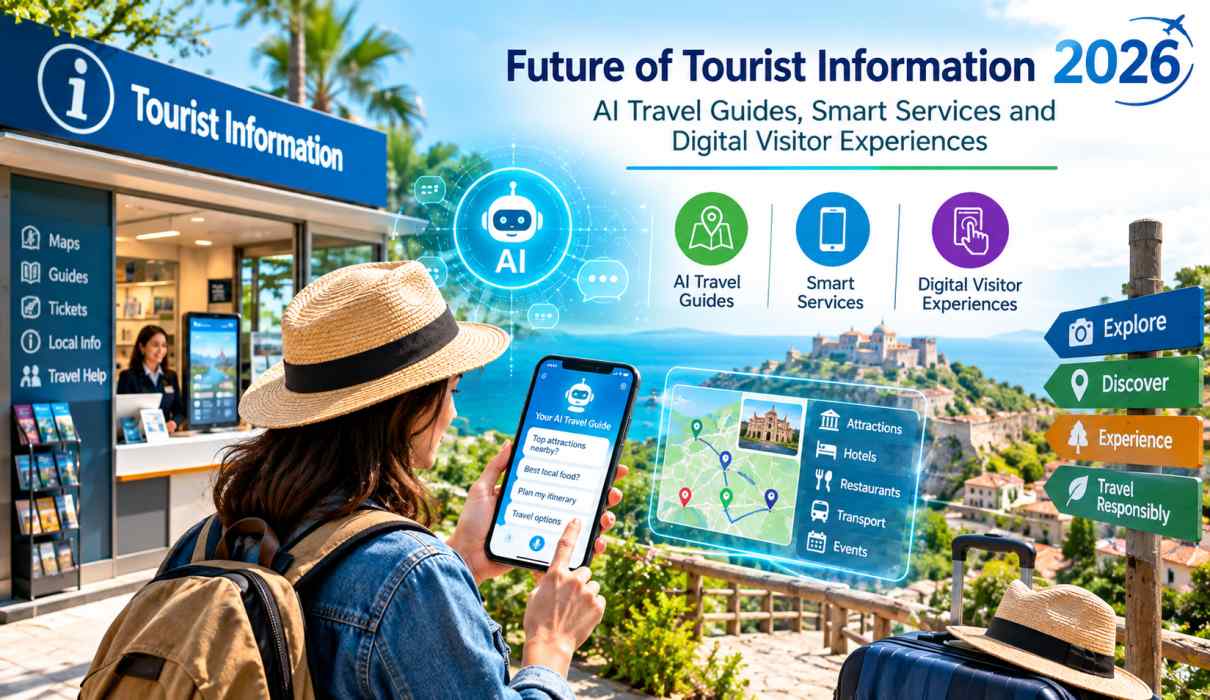
Future of Tourist Information 2026: AI Travel Guides, Smart Services and Digital Visitor Experiences
Tourist information has changed dramatically over the past decade. Traditional visitor centres, printed brochures and static maps are increasingly being complemented by websites, mobile applications, digital maps, online booking platforms and real-time travel updates. In 2026, this transformation is moving into a new phase as artificial intelligence, smart tourism technology and personalized digital services become more important.
The future of tourist information in 2026 is focused on making travel easier, faster and more personalized. Visitors can increasingly discover destinations, attractions, restaurants, transportation options and local experiences through digital platforms. AI-powered travel guides can help travelers organize itineraries, answer questions and provide recommendations based on their interests.
At the same time, physical tourist information centres continue to have an important role. They can provide human assistance, local knowledge and support for travelers who need help navigating unfamiliar destinations.
The combination of AI travel guides, smart visitor services, digital information and human support is creating a more connected tourism experience.
What Is Tourist Information?
Tourist information refers to the services, resources and guidance available to travelers before and during a trip. It can include information about destinations, attractions, accommodation, transportation, restaurants, events, activities, safety, local culture and travel regulations.
Traditionally, tourists received this information from visitor centres, tourism offices, printed brochures, maps and travel agents. Today, travelers can access much of the same information through smartphones and online platforms.
Modern tourist information can include:
- Digital travel guides
- AI-powered travel assistants
- Interactive maps
- Destination websites
- Mobile tourism applications
- Real-time transportation information
- Online attraction information
- Local event calendars
- Personalized travel recommendations
- Multilingual visitor services
- Digital booking and ticketing
- Sustainable travel guidance
The evolution of these services is changing how visitors interact with destinations.
AI Travel Guides Are Transforming Tourism
Artificial intelligence is one of the most important technologies influencing tourist information trends in 2026.
AI travel guides can help travelers find information through conversational interfaces. Instead of searching through multiple websites, visitors can ask questions in natural language and receive organized answers.
For example, a traveler could ask an AI travel assistant:
- What should I visit this afternoon?
- Which attractions are suitable for families?
- What can I do near my hotel?
- Where can I experience local culture?
- What are the best activities for a rainy day?
- How can I travel between two attractions?
AI systems can potentially combine information about interests, time, location, transportation and opening hours to provide more relevant suggestions.
This does not mean traditional tourism information will disappear. Instead, AI can act as an additional layer that makes existing information easier to access.
Personalized Travel Information
Travelers have different interests and priorities. A history enthusiast may want museums and heritage sites, while a family may be more interested in child-friendly attractions. Another traveler may prioritize food, shopping, nature or adventure.
Personalization is therefore becoming an important part of digital tourism.
Modern tourist information platforms can organize content according to different visitor interests. AI can potentially make this experience more dynamic by adapting recommendations based on a traveler’s questions and preferences.
Personalized tourist information can help visitors save time and discover experiences that match their individual needs.
For tourism businesses, personalization can also create opportunities to promote relevant attractions, activities and services without overwhelming visitors with unnecessary information.
Smart Tourist Information Centres
Physical tourist information centres are also evolving.
The traditional model of a visitor centre with brochures and information desks can be enhanced with digital screens, interactive maps, self-service kiosks and multilingual technology.
A smart tourist information centre may provide:
- Touchscreen destination maps
- Digital attraction directories
- QR-code information
- Self-service travel planning
- Public transportation information
- Multilingual content
- Interactive local guides
- Digital ticketing
- Accessibility information
- Live travel updates
These technologies can allow visitors to obtain basic information independently while staff remain available for more complex questions.
The result is a hybrid model that combines technology with human expertise.
Real-Time Travel Information
Real-time information is becoming increasingly valuable for modern travelers.
Tourists often need current information about transportation, weather, attraction conditions, event schedules and temporary closures.
Static brochures cannot easily provide this level of flexibility. Digital systems, however, can update information more quickly.
Real-time tourist information can help visitors make better decisions during their trips. If an attraction becomes temporarily unavailable, for example, a digital platform can potentially direct visitors toward alternative activities.
Similarly, transportation information can help travelers adjust their plans when delays or changes occur.
This creates a more responsive tourism experience.
Digital Maps and Interactive Destination Guides
Maps remain one of the most important forms of tourist information, but digital mapping is making them more interactive.
Modern destination maps can show attractions, restaurants, hotels, public transportation, walking routes, events and other points of interest.
Interactive maps can also help travelers discover what is located near a particular attraction.
For example, after visiting a museum, a traveler could explore nearby restaurants, parks, shopping streets or cultural sites through the same digital map.
This can encourage visitors to explore beyond the most famous tourist attractions and discover local neighborhoods and experiences.
Multilingual Tourist Services
Language can be a major challenge for international travelers.
Digital tourist information can make destination content available in multiple languages, helping visitors understand important information more easily.
AI-powered translation and multilingual digital interfaces may make communication more convenient for tourists and tourism businesses.
Multilingual services can be especially useful for:
- Transportation information
- Safety instructions
- Attraction descriptions
- Restaurant information
- Emergency guidance
- Cultural information
- Local regulations
- Hotel and accommodation services
Improved language accessibility can help destinations create a more welcoming environment for international visitors.
Mobile-First Tourist Information
Smartphones have become an essential travel tool. Travelers increasingly use mobile devices to search for destinations, navigate cities, check transportation, find restaurants and manage bookings.
As a result, mobile-first tourist information is becoming a central part of destination marketing and visitor services.
A modern tourism platform should be easy to use on mobile devices. Information should be clear, fast to access and designed for travelers who may be using their phones while walking or sightseeing.
QR codes can also connect physical locations with digital information. A visitor can scan a code at an attraction and instantly access historical information, maps, audio guides or related activities.
Digital Visitor Experiences
Tourist information is no longer limited to answering basic questions. It can also become part of the visitor experience itself.
Digital storytelling, interactive content, audio guides, virtual experiences and augmented reality can help visitors understand destinations in new ways.
For example, a heritage site could use digital technology to explain how a building looked in the past. Museums can provide interactive information about exhibits. Historic neighborhoods can offer self-guided walking tours through mobile platforms.
These experiences can make destination information more engaging.
Smart Tourism and Connected Destinations
The concept of smart tourism involves using technology and data to improve tourism experiences and destination management.
A smart destination can connect different services, including transportation, attractions, accommodation, public facilities and visitor information.
Data can help tourism organizations understand visitor behavior and identify areas where improvements may be needed.
For example, destination managers may use information about visitor flows to understand which attractions are particularly crowded and where additional services may be required.
Smart tourism can therefore benefit both travelers and destination managers.
Sustainable Tourist Information
Sustainability is another major part of the future of tourism.
Tourist information platforms can encourage more responsible travel by highlighting public transportation, walking routes, cycling opportunities, local businesses and environmentally conscious activities.
Digital guides can also educate visitors about local environments and cultural heritage.
Sustainable tourist information may encourage travelers to:
- Use public transportation
- Visit less crowded areas
- Support local businesses
- Reduce unnecessary waste
- Respect cultural heritage
- Follow environmental guidelines
- Choose responsible tourism activities
By presenting sustainable choices alongside conventional travel information, destinations can make responsible travel easier.
Supporting Local Businesses
Tourist information has an important role in connecting visitors with local businesses.
Travelers often want authentic experiences, local food, independent shops and community-based activities.
Digital tourism platforms can showcase local restaurants, markets, cultural events, artisans and tour operators.
This can help distribute tourism spending across a wider range of businesses rather than concentrating it only around major attractions.
Local businesses can also benefit when tourist information provides accurate descriptions, maps, opening information and links to their services.
Accessibility in Tourist Information
Accessible tourism is becoming increasingly important.
Visitors may have different mobility, hearing, vision, language or communication requirements. Tourist information should therefore make accessibility information easy to find.
Digital destination platforms can provide details about accessible entrances, elevators, accessible transportation, adapted facilities and other relevant services.
Clear accessibility information helps travelers plan with greater confidence.
Accessible design should also apply to websites, mobile applications, digital kiosks and physical tourist information centres.
Human Support Still Matters
Despite the rapid growth of AI and digital technology, human interaction remains valuable in tourism.
Travelers sometimes face unusual situations that require judgment, empathy or local knowledge. A visitor may need help after missing transportation, dealing with a language barrier or finding an alternative activity.
Experienced tourism staff can provide context and practical assistance that automated systems may not always deliver.
For this reason, the future of tourist information is likely to be a combination of digital convenience and human support.
AI can handle routine questions while trained staff focus on personalized assistance and complex visitor needs.
The Future of Tourist Information Centres
Tourist information centres are likely to continue evolving rather than disappearing.
Future centres may function as digital visitor hubs where travelers can access information, receive human assistance, explore interactive maps, purchase tickets and discover local experiences.
The physical environment may include:
- Digital information displays
- Interactive destination maps
- Self-service kiosks
- Charging stations
- Multilingual information
- Local product showcases
- Booking services
- Accessibility support
- Sustainable travel information
This hybrid approach can serve visitors who prefer technology as well as those who want face-to-face assistance.
Challenges of Digital Tourist Information
The growth of digital tourism also creates challenges.
Information must remain accurate because outdated opening hours, prices or transportation details can cause problems for travelers.
Privacy and responsible data use are also important when tourism platforms collect information about visitor preferences or behavior.
Another challenge is the digital divide. Not every traveler has the same access to smartphones, mobile data or digital services.
For this reason, destinations should avoid relying entirely on digital platforms. Physical information, staff assistance and accessible communication remain important.
What Travelers Can Expect in 2026
The tourist information experience of 2026 is likely to become more connected and personalized.
Travelers can expect continued development in:
- AI-powered travel assistants
- Personalized destination recommendations
- Digital maps
- Real-time travel updates
- Mobile tourism applications
- Smart visitor centres
- Multilingual information
- Digital ticketing
- Interactive destination guides
- Sustainable travel recommendations
- Augmented and immersive experiences
- Improved accessibility information
The exact services available will vary between destinations, but the overall direction is toward faster, more personalized and more connected visitor experiences.
Conclusion
The future of tourist information in 2026 is being shaped by artificial intelligence, mobile technology, smart tourism systems and changing traveler expectations.
AI travel guides can make destination information easier to access, while digital maps, real-time updates and personalized recommendations can help travelers plan their experiences more efficiently. Smart tourist information centres can combine interactive technology with professional human assistance, creating a hybrid model for modern visitors.
At the same time, sustainability, accessibility, multilingual services and support for local businesses are becoming important parts of the modern tourist information ecosystem.
The goal is not simply to replace traditional tourist information with technology. Instead, the future is about creating a connected system where AI, digital services, physical visitor centres and local expertise work together.
As destinations continue to adopt smart tourism technologies, tourist information will become more than a source of directions and brochures. It will increasingly become an interactive travel companion that helps visitors discover destinations, make informed decisions and enjoy more personalized experiences.