
 By
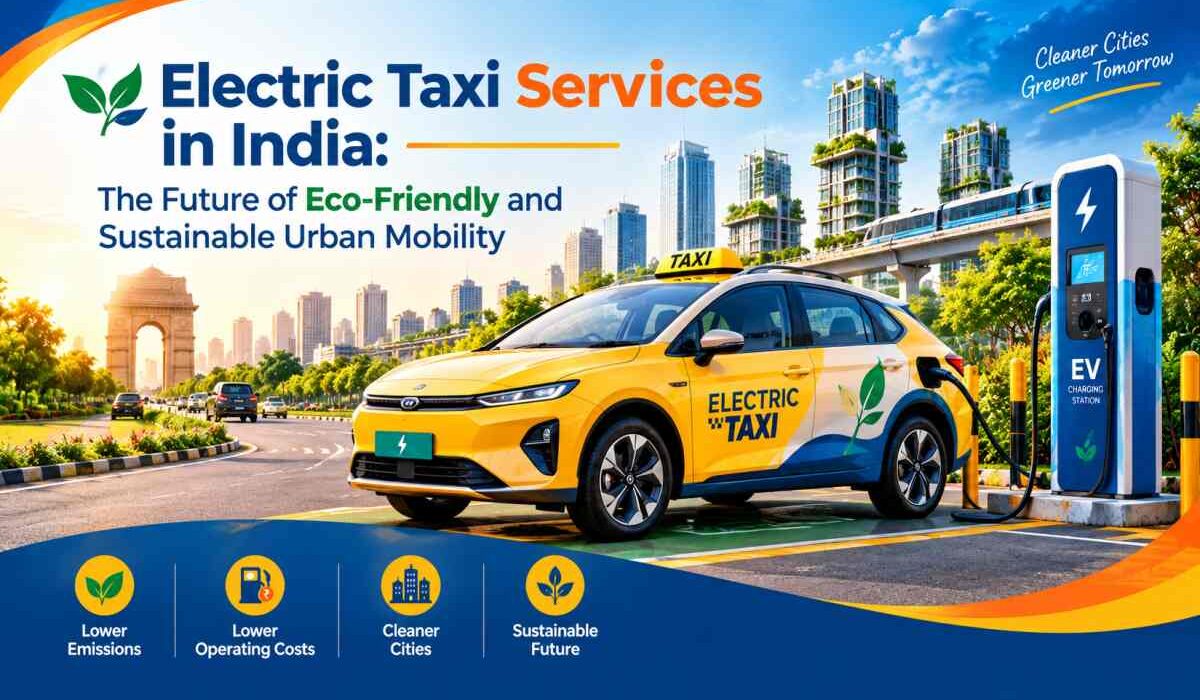
Electric Taxi Services in India: The Future of Eco-Friendly and Sustainable Urban Mobility
Introduction
India’s transportation industry is experiencing a significant transformation as electric vehicles become increasingly important in modern urban mobility. With growing concerns about air pollution, rising fuel costs, climate change, and traffic congestion, electric taxi services in India are emerging as a promising alternative to traditional petrol and diesel-powered cabs.
From metropolitan cities such as Delhi, Mumbai, Bengaluru, Hyderabad, and Chennai to developing urban centres, electric mobility is attracting attention from transportation companies, policymakers, businesses, and environmentally conscious passengers.
Electric taxis offer several potential advantages, including lower operating costs, reduced vehicle emissions, quieter journeys, and improved energy efficiency. Government initiatives, expanding charging infrastructure, and technological advancements are also supporting the transition towards cleaner transportation.
However, challenges such as charging availability, vehicle affordability, battery performance, and operational planning remain important considerations.
This article explores how electric taxi services in India are transforming urban transportation, their benefits, challenges, emerging technologies, and future opportunities in sustainable mobility.
1. What Are Electric Taxi Services?
Electric taxi services use battery-powered electric vehicles to transport passengers instead of conventional petrol or diesel vehicles.
These taxis operate through rechargeable batteries that supply electricity to electric motors.
Unlike conventional vehicles, battery-electric taxis do not produce exhaust emissions while driving.
Passengers can access electric cab services through mobile applications, corporate transportation arrangements, airport transfers, or dedicated fleet operators.
How Electric Taxi Services Work
The basic operating process includes:
- Taxi Booking: Passengers book an electric cab through a digital platform or transportation provider.
- Vehicle Allocation: The system assigns an available electric taxi.
- Electric Transportation: The vehicle uses battery power to complete the journey.
- Battery Charging: The taxi recharges at a suitable charging facility.
- Fleet Management: Operators monitor vehicle availability, charging schedules, and maintenance requirements.
Modern electric taxi operations increasingly use digital technology to improve fleet efficiency and passenger convenience.
2. Why Electric Taxi Services Are Growing in India
Several economic, environmental, and technological factors are encouraging the adoption of electric taxis.
Rising Fuel Costs
Fuel expenses represent a significant operating cost for conventional taxi services.
Electric vehicles can offer lower energy costs per kilometre, depending on electricity tariffs, charging arrangements, and vehicle efficiency.
For high-mileage commercial fleets, these savings may improve long-term operating economics.
Increasing Environmental Awareness
Air pollution remains a major concern in several Indian cities.
Electric taxis can help reduce local exhaust pollution, particularly when replacing petrol or diesel vehicles.
Government Support
Central and state government initiatives have encouraged electric mobility through incentives, infrastructure development, and policy measures.
Support varies according to vehicle category, eligibility conditions, location, and the applicable scheme.
Advancements in EV Technology
Improvements in battery systems, vehicle efficiency, and charging technology are making electric vehicles more practical for commercial transportation.
Growing Demand for Sustainable Travel
Some passengers and corporate customers increasingly consider environmental performance when choosing transportation services.
This creates opportunities for taxi operators offering cleaner mobility solutions.
3. Environmental Benefits of Electric Taxi Services
Environmental sustainability is one of the strongest reasons for encouraging electric taxi adoption.
Reduced Local Air Pollution
Battery-electric taxis produce no tailpipe emissions.
Replacing conventional taxis with electric vehicles can help reduce local emissions of pollutants associated with combustion engines.
However, the overall environmental benefit depends partly on how electricity is generated.
Lower Greenhouse Gas Emissions
Electric vehicles can produce lower lifecycle greenhouse gas emissions than comparable conventional vehicles.
The actual difference depends on electricity generation, battery manufacturing, vehicle efficiency, and total distance travelled.
Increasing renewable electricity generation can further improve environmental performance.
Reduced Noise Pollution
Electric motors generally operate more quietly than internal combustion engines, particularly at lower speeds.
This can contribute to a more comfortable urban environment.
Improved Energy Efficiency
Electric powertrains convert a relatively high proportion of supplied energy into vehicle movement.
Regenerative braking also allows electric vehicles to recover some energy during deceleration.
These characteristics can make electric taxis particularly suitable for stop-and-go urban traffic.
4. Economic Benefits of Electric Taxi Services
Electric taxis can offer financial advantages for commercial transportation businesses.
Lower Running Costs
Electricity may cost less per kilometre than petrol or diesel.
However, savings depend on charging tariffs, energy consumption, and vehicle utilisation.
Reduced Routine Maintenance
Electric vehicles generally have fewer moving parts in their powertrains than conventional vehicles.
They do not require engine oil changes and may experience reduced brake wear because of regenerative braking.
Nevertheless, tyres, suspension systems, batteries, electronics, and other components still require maintenance.
Long-Term Fleet Savings
For operators covering substantial daily distances, lower energy and maintenance costs may help offset higher initial vehicle prices.
A proper total cost of ownership calculation should include financing, insurance, battery warranties, charging infrastructure, depreciation, and vehicle downtime.
Business Opportunities
Electric taxi services create opportunities in fleet operations, charging infrastructure, maintenance, software development, and transportation management.
These opportunities can support innovation and employment across the electric mobility ecosystem.
5. Government Initiatives Supporting Electric Mobility
Government policies play an important role in India’s electric mobility transition.
PM E-DRIVE Scheme
The PM Electric Drive Revolution in Innovative Vehicle Enhancement scheme supports specified electric mobility categories and charging infrastructure.
Its benefits are subject to official eligibility requirements, timelines, and available funding.
Taxi operators should verify whether their vehicle category qualifies before including incentives in financial calculations.
State EV Policies
Several Indian states have introduced electric vehicle policies addressing incentives, charging infrastructure, manufacturing, and adoption.
The availability of benefits differs between states and may change over time.
Charging Infrastructure Development
Public charging infrastructure is important for improving electric taxi operations.
Government programmes and private investment can help expand charging networks in urban areas and along important transportation routes.
Public Transport Electrification
Electric buses and other public transport initiatives complement electric taxi adoption.
Together, these developments can support a broader transition towards cleaner urban transportation.
6. Role of Charging Infrastructure in Electric Taxi Growth
Reliable charging infrastructure is essential for the successful operation of electric taxi fleets.
Unlike private vehicles, commercial taxis often travel substantial distances and require predictable charging schedules.
Public Charging Stations
Public charging facilities allow drivers to recharge during operational breaks or between passenger trips.
Their usefulness depends on location, compatibility, reliability, pricing, and waiting times.
Fast Charging Technology
Fast charging can reduce vehicle downtime when supported by the vehicle and charging equipment.
However, charging speed varies according to battery temperature, state of charge, charger output, and vehicle specifications.
Depot-Based Charging
Dedicated fleet depots can provide more predictable charging arrangements.
Operators can schedule overnight or off-peak charging to improve vehicle availability.
Smart Charging Management
Digital charging systems can monitor energy consumption, charger availability, and charging schedules.
These technologies may help fleet operators manage electricity demand and operational costs.
7. AI and Digital Technology in Electric Taxi Services
Artificial intelligence and digital platforms are becoming important tools in modern electric fleet management.
Intelligent Route Planning
Navigation systems can consider traffic conditions, travel distance, and road networks when recommending routes.
For electric taxis, route planning can also account for remaining battery range and charging availability.
Battery Monitoring
Vehicle management systems monitor battery condition, temperature, and energy consumption.
These measurements help operators understand vehicle performance and plan maintenance.
Smart Fleet Allocation
Fleet management software can match passenger demand with available vehicles.
It may also consider vehicle location, battery charge, and expected journey length.
Predictive Maintenance
Data analysis can identify unusual vehicle performance patterns and support preventive maintenance.
This may reduce unexpected breakdowns and improve fleet reliability.
Digital Payment Integration
Mobile booking applications and digital payment systems can make electric taxi services more convenient for passengers.
Together, these technologies can improve operational efficiency and customer experience.
8. Electric Taxi Services and Sustainable Urban Mobility
Sustainable urban mobility aims to provide accessible and efficient transportation while reducing environmental impacts.
Electric taxis can contribute to this objective when integrated with broader transport planning.
Cleaner City Transportation
Electrifying high-mileage taxi fleets can reduce local exhaust emissions in heavily travelled urban areas.
First-Mile and Last-Mile Connectivity
Electric taxis can connect passengers with railway stations, metro systems, airports, and bus terminals.
This can improve the accessibility of public transportation.
Corporate Transportation
Businesses may use electric taxis for employee transportation and official travel.
Fleet electrification can also contribute to corporate sustainability initiatives.
Airport Transportation
Airport taxi services often operate on relatively predictable routes.
These operating patterns can make electric vehicles practical when suitable charging infrastructure is available.
Integration With Public Transport
Electric taxis work best as part of a comprehensive mobility system that includes buses, metros, cycling, and walking.
Electrification alone does not eliminate road congestion, so efficient transport planning remains essential.
9. Challenges Facing Electric Taxi Services in India
Despite their advantages, electric taxi services face several operational challenges.
High Initial Vehicle Costs
Electric vehicles may have higher purchase prices than comparable conventional vehicles.
Financing options, fleet discounts, and applicable incentives can influence affordability.
Limited Charging Availability
Charging infrastructure is expanding, but availability remains uneven across cities and regions.
Operators must consider charging locations before introducing electric taxis on particular routes.
Charging Downtime
Charging takes longer than conventional refuelling in many situations.
Careful scheduling is necessary to maintain fleet availability.
Battery Performance
Battery performance can vary with temperature, driving conditions, vehicle load, and charging habits.
Commercial operators must evaluate battery warranties and expected replacement costs.
Driver Training
Drivers need training in energy-efficient driving, charging procedures, vehicle operation, and emergency response.
Addressing these challenges will be essential for expanding reliable electric cab services.
10. Electric Taxis vs Traditional Fuel-Based Taxis
Understanding the differences between electric and conventional taxis helps operators make informed investment decisions.
| Feature | Electric Taxis | Petrol or Diesel Taxis |
|---|---|---|
| Energy Source | Rechargeable battery | Petrol or diesel |
| Tailpipe Emissions | Zero | Produces exhaust emissions |
| Running Costs | Potentially lower | Dependent on fuel prices |
| Maintenance | Generally simpler powertrain | More engine-related maintenance |
| Refuelling | Requires charging time | Usually faster |
| Initial Investment | Often higher | Often lower |
| Noise Levels | Generally quieter | More engine noise |
| Environmental Impact | Depends on electricity and lifecycle factors | Includes fuel combustion emissions |
The best option depends on vehicle costs, daily mileage, infrastructure availability, and business requirements.
11. Future of Electric Taxi Services in India
The future of electric taxi services in India will depend on technological innovation, supportive policies, charging infrastructure, and commercial viability.
Expanding Electric Cab Fleets
More transportation businesses may consider electric vehicles as operating economics improve.
Better Battery Technology
Advancements in battery technology could improve driving range, durability, charging performance, and affordability.
Renewable Energy Integration
Charging stations powered partly by renewable electricity can help reduce the environmental footprint of electric transportation.
Advanced Fleet Management
AI-powered fleet management may improve route efficiency, vehicle utilisation, and charging schedules.
Greater Passenger Awareness
Clear information about vehicle safety, reliability, pricing, and environmental performance can help passengers make informed transportation choices.
12. How to Choose a Reliable Electric Taxi Service
Passengers considering electric taxi services should evaluate several practical factors.
Service Availability: Confirm that the provider operates in the required location.
Transparent Pricing: Review estimated fares, waiting charges, cancellation policies, and additional fees.
Vehicle Safety: Choose operators that maintain vehicles properly and follow applicable safety requirements.
Booking Convenience: Look for accessible booking methods and reliable customer support.
Driver Professionalism: Professional drivers and clear service standards can improve the travel experience.
Charging Reliability: For longer journeys, operators should have suitable charging arrangements.
These considerations help passengers select convenient and dependable eco-friendly transportation services.
Frequently Asked Questions
1. What are electric taxi services in India?
Electric taxi services use battery-powered vehicles to provide passenger transportation through booking platforms, fleet operators, and other transportation providers.
2. Are electric taxis environmentally friendly?
Electric taxis produce zero tailpipe emissions and can reduce local air pollution. Their overall environmental impact depends on electricity generation, manufacturing, and vehicle usage.
3. Are electric taxis cheaper than petrol taxis?
Electric taxis can have lower energy and routine maintenance costs. However, overall affordability depends on purchase price, charging costs, financing, and utilisation.
4. Can electric taxis be used for airport transfers?
Yes. Electric taxis can provide airport transfers when their driving range and charging arrangements are suitable for the journey.
5. What is the future of electric taxis in India?
Their future growth will depend on charging infrastructure, vehicle affordability, battery improvements, government policies, and customer demand.
Conclusion
Electric taxi services in India represent an important opportunity to make urban transportation cleaner, quieter, and more energy-efficient.
With potential benefits such as reduced local pollution, lower operating costs, and improved fleet management, electric taxis can contribute to India’s sustainable mobility transition.
Government initiatives, charging infrastructure investments, and advances in battery technology are helping create opportunities for electric cab operators.
However, widespread adoption requires careful attention to vehicle affordability, charging reliability, operational efficiency, and passenger safety.
As technology improves and supporting infrastructure develops, electric taxis could become an increasingly important part of India’s transportation ecosystem.
The future of sustainable urban mobility will depend not only on adopting electric vehicles but also on creating accessible, efficient, and environmentally responsible transportation systems.