
 By
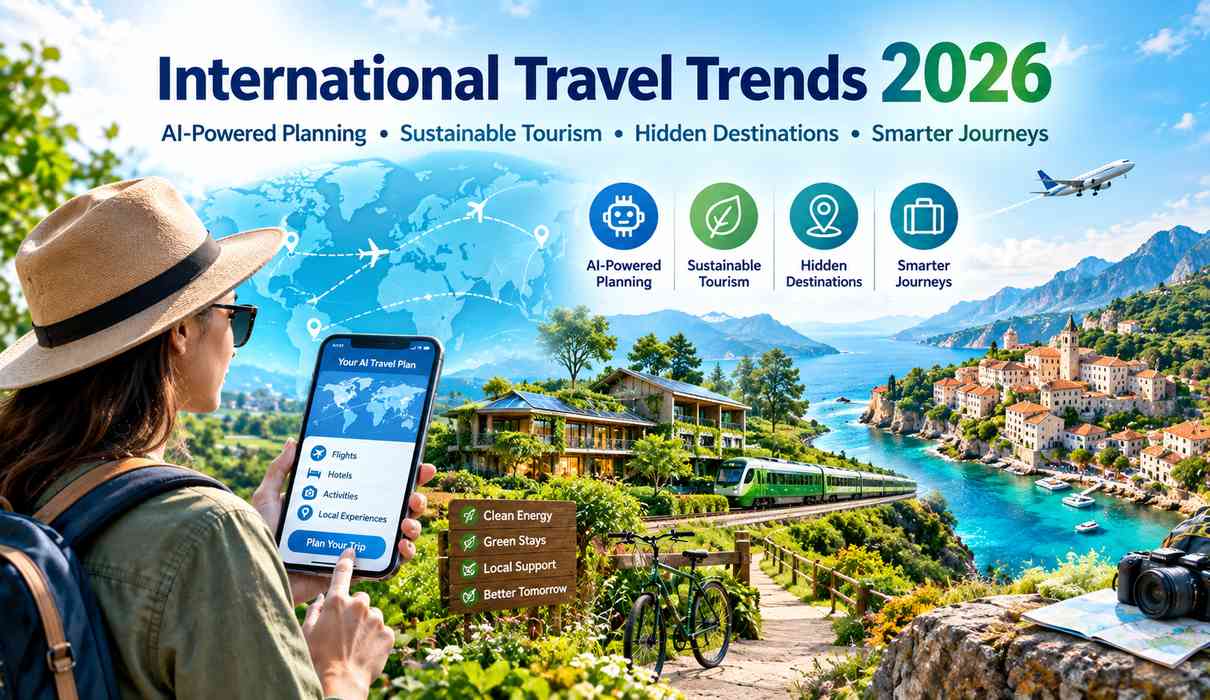
International Travel Trends 2026: AI-Powered Planning, Sustainable Tourism, Hidden Destinations and Smarter Journeys
International travel is changing rapidly in 2026. Travelers are no longer simply searching for popular destinations and booking traditional holiday packages. Technology, sustainability, affordability, personalized experiences and changing traveler expectations are reshaping how people discover destinations, organize trips and experience different cultures.
Artificial intelligence is becoming an increasingly important part of travel planning, helping travelers discover destinations, build itineraries, compare options and find activities based on their interests. At the same time, sustainable tourism is moving beyond a niche concept as travelers, businesses and destinations focus more attention on environmental protection, local communities and responsible visitor management.
Another important development is the growing interest in less crowded and emerging destinations. Instead of visiting only the world’s most famous tourist hotspots, travelers are increasingly looking for authentic experiences, local culture, nature and destinations that offer better value.
The International Travel Trends 2026 landscape therefore represents a combination of technology, responsible tourism and more personalized journeys. Here are the major trends shaping the future of international travel.
1. AI-Powered Travel Planning Is Becoming Mainstream
Artificial intelligence is one of the biggest developments influencing international travel in 2026. AI tools can help travelers research destinations, create itineraries, identify attractions, compare travel options and organize activities.
Instead of spending hours searching through dozens of websites, travelers can describe their preferences and receive a customized starting point for their trip. For example, a traveler can request a seven-day itinerary focused on food, culture, nature, shopping or adventure and then adjust the recommendations according to budget and available time.
This trend is particularly visible among Indian travelers. According to Agoda’s 2026 Travel Outlook, 68% of surveyed Indian travelers said they were likely to use AI for their next trip, while 88% said they either trusted or felt neutral toward AI-generated travel recommendations.
AI can also support travel beyond itinerary creation. Travelers may use it for restaurant recommendations, language assistance, budgeting, packing suggestions and real-time information.
However, travelers should still verify important details such as visa requirements, entry regulations, opening hours, cancellation policies and transportation schedules through official sources.
2. Personalized Journeys Are Replacing One-Size-Fits-All Travel
Travelers increasingly expect holidays to reflect their individual interests rather than generic tour packages.
Personalization can include recommendations based on budget, travel style, interests, age group, dietary preferences, mobility requirements and previous travel experiences.
A family may want child-friendly attractions and convenient transportation, while a solo traveler might prioritize social experiences and flexible schedules. A photography enthusiast may want scenic locations, while a food-focused traveler may prefer local markets, cooking classes and regional restaurants.
AI and travel platforms are making this type of personalization easier to deliver. The OECD’s 2026 tourism report notes that digitalization and AI are creating opportunities for more personalized visitor experiences as well as improved tourism operations and destination management.
The result is a shift from simply asking, “Where should I go?” toward asking, “What kind of experience do I want?”
3. Sustainable Tourism Is Becoming a Core Travel Priority
Sustainability is another major international travel trend in 2026.
Travelers are paying greater attention to how their holidays affect the environment and local communities. Hotels, tour operators and destinations are responding with initiatives focused on energy efficiency, waste reduction, responsible wildlife experiences, local sourcing and conservation.
Sustainable tourism is also increasingly connected with the idea of regenerative travel. While traditional sustainability often focuses on reducing negative impacts, regenerative tourism aims to create positive contributions to destinations through conservation, community investment and restoration projects.
For travelers, responsible choices can include staying at environmentally conscious accommodations, using public transportation where practical, supporting locally owned businesses and respecting cultural and environmental guidelines.
Sustainable travel does not necessarily mean avoiding international travel. Instead, it encourages travelers to make more thoughtful decisions about where, how and when they travel.
4. Hidden and Less-Crowded Destinations Are Gaining Attention
Overtourism has become a major challenge in some of the world’s most popular destinations. Famous cities and attractions can experience intense visitor concentrations during peak periods, putting pressure on infrastructure, residents and natural environments.
As a result, travelers are increasingly discovering lesser-known destinations.
In 2026, travel industry discussions are highlighting overlooked locations that can offer distinctive experiences without the same concentration of visitors found in major tourist hotspots. Intrepid Travel’s 2026 “Not Hot List,” for example, highlights lesser-known destinations as part of an effort to encourage travelers to look beyond heavily visited locations.
This trend can benefit travelers and local communities. Visitors may enjoy a more relaxed experience while smaller destinations gain tourism income and opportunities for local businesses.
However, hidden destinations should not automatically be assumed to be completely uncrowded or untouched. Travelers should research local infrastructure, environmental conditions and community expectations before visiting.
5. Smart Travel Means Better Management of Visitor Flows
Technology is not only helping individual travelers. It is also helping destinations manage tourism.
Governments and tourism organizations are increasingly exploring data, digital tools and AI to understand visitor movements, congestion and demand. This can help destinations identify crowded areas, distribute visitors more effectively and improve infrastructure planning.
The OECD reports that countries are increasingly investing in tourism data systems and exploring AI for evidence-based decision-making. Digital tools can also help destinations understand congestion patterns and manage visitor flows.
This could change how popular attractions operate in the future. Travelers may receive information about busy periods, alternative attractions or less crowded routes before arriving.
For destinations, smarter visitor management can help balance tourism revenue with environmental protection and quality of life for residents.
6. Travelers Are Looking More Closely at Affordability
Travel costs remain an important factor in international trip planning. Airfares, accommodation, food, transportation and currency exchange rates can significantly affect the overall cost of a holiday.
In 2026, travelers are becoming more strategic about their budgets. Mastercard’s 2026 Travel Trendline identified favorable exchange rates as one factor influencing destination decisions, alongside AI planning, solo travel and combining business trips with leisure.
Budget-conscious international travelers may compare destinations based on total trip costs rather than simply flight prices.
Travelers can potentially save money by comparing travel dates, choosing alternative airports, staying outside major tourist centers, traveling during shoulder seasons and using public transportation.
AI-powered planning can also make it easier to compare multiple itinerary options according to a specific budget.
7. Solo Travel Continues to Develop
Solo travel is another important part of the modern international tourism landscape.
Travelers increasingly value flexibility and independence. Solo trips allow people to create schedules around their own interests rather than coordinating with a large group.
Modern technology is making independent travel easier. Mobile maps, translation tools, digital payments, travel applications and AI assistants can provide support throughout a journey.
At the same time, solo travelers often look for experiences that allow them to meet other people. Group excursions, local workshops, food tours, cultural events and community-based experiences can provide opportunities for social interaction without requiring travelers to join a traditional group holiday.
Safety remains an important consideration, particularly for first-time solo international travelers. Researching local regulations, transportation, accommodation locations and emergency contacts is essential.
8. Bleisure and Flexible International Trips Are Growing
The traditional distinction between business travel and leisure travel is becoming less rigid.
Many professionals are combining work trips with additional personal travel. This approach, often called bleisure travel, allows travelers to extend a business visit by several days to explore the destination.
The trend can create opportunities for hotels, airlines, tourism businesses and city destinations.
For example, someone traveling internationally for a conference may add a weekend to visit museums, restaurants, historical attractions or nearby destinations.
Flexible working arrangements have also contributed to changing travel patterns. For some travelers, the ability to work remotely makes it possible to combine professional responsibilities with longer stays.
9. Cultural and Experiential Tourism Is Becoming More Important
Travelers increasingly want experiences rather than simply collecting photographs of famous landmarks.
Cultural tourism can include local food, traditional festivals, historical neighborhoods, craft workshops, music, art, architecture and community experiences.
This creates opportunities for smaller businesses and local communities to participate directly in tourism.
Authentic experiences can also encourage travelers to stay longer and explore areas beyond major tourist attractions. Instead of visiting a city only for its most famous landmark, travelers may spend additional time learning about its history, cuisine and everyday culture.
Responsible cultural tourism requires respect. Visitors should follow local customs, ask permission before photographing people when appropriate and avoid treating communities or traditions simply as entertainment.
10. Digital Travel Tools Are Simplifying the Journey
The international travel experience is becoming increasingly digital.
Travelers can use smartphones for boarding passes, hotel reservations, navigation, translation, payments, travel insurance information and itinerary management.
Digital tools can reduce paperwork and make it easier to organize multiple components of an international journey.
At the destination level, tourism organizations are also adopting digital technologies to improve accessibility, visitor information and operational efficiency.
The OECD highlights digital transformation as an increasingly important part of tourism competitiveness and destination management.
Nevertheless, travelers should maintain offline copies of essential documents and important contact information in case of connectivity problems.
11. Nature, Wellness and Outdoor Experiences Remain Popular
International travelers are increasingly interested in experiences connected to nature and personal wellbeing.
Nature-based tourism can include hiking, wildlife observation, national parks, coastal experiences and scenic journeys. Wellness travel may include retreats, spas, meditation, fitness programs and healthy culinary experiences.
These trends can overlap with sustainable tourism when destinations protect natural environments and tourism income supports conservation.
However, nature tourism needs careful management. Fragile ecosystems can be damaged by excessive visitor numbers, waste and irresponsible behavior. Travelers should follow park regulations and avoid activities that disturb wildlife or sensitive environments.
12. Travel Is Becoming More Resilient and Flexible
International tourism operates in a world affected by economic changes, geopolitical developments, extreme weather events and transportation disruptions.
The OECD’s 2026 tourism analysis notes that tourism demand remains strong but that geopolitical tensions, safety concerns, affordability and extreme weather can influence travel patterns. It emphasizes resilience, flexibility and better destination management as important priorities for the sector.
For travelers, flexibility can mean choosing refundable accommodation, understanding cancellation policies, purchasing suitable travel insurance and maintaining alternative transportation options.
Smart travel planning is therefore not just about finding the cheapest or most exciting option. It is also about preparing for unexpected changes.
13. The Future of International Travel Will Be Smarter and More Responsible
The biggest international travel trends of 2026 point toward a broader transformation of tourism.
AI is making travel planning faster and more personalized. Sustainable tourism is encouraging travelers and businesses to consider environmental and community impacts. Emerging destinations are gaining attention as travelers look beyond traditional hotspots. Digital technology is helping travelers manage journeys while helping destinations understand visitor patterns.
At the same time, travelers are becoming more deliberate about their budgets, experiences and travel choices.
The future is unlikely to be defined by technology alone. The most meaningful travel experiences will combine technology with human connection, local culture, environmental responsibility and flexibility.
Conclusion
International Travel Trends 2026 show that the future of tourism is becoming more personalized, sustainable, digital and experience-driven. AI-powered trip planning is helping travelers organize journeys around their interests, while sustainable tourism is encouraging more responsible relationships with destinations and communities.
The growing popularity of hidden destinations can also help distribute tourism beyond crowded hotspots, provided visitor growth is managed responsibly. Meanwhile, flexible travel, solo journeys, cultural experiences, wellness tourism and smart digital tools are giving travelers more ways to design trips around their individual needs.
For anyone planning an international holiday in 2026, the key is to travel smarter rather than simply travel more. Use technology for research and organization, verify important information through reliable sources, consider the impact of travel choices and explore destinations beyond the most obvious options.
As international tourism continues to evolve, the modern journey is becoming more than a trip from one country to another. It is an opportunity to discover new cultures, support local economies, protect destinations and create meaningful experiences while using technology to make the entire journey more convenient and informed.