
 By
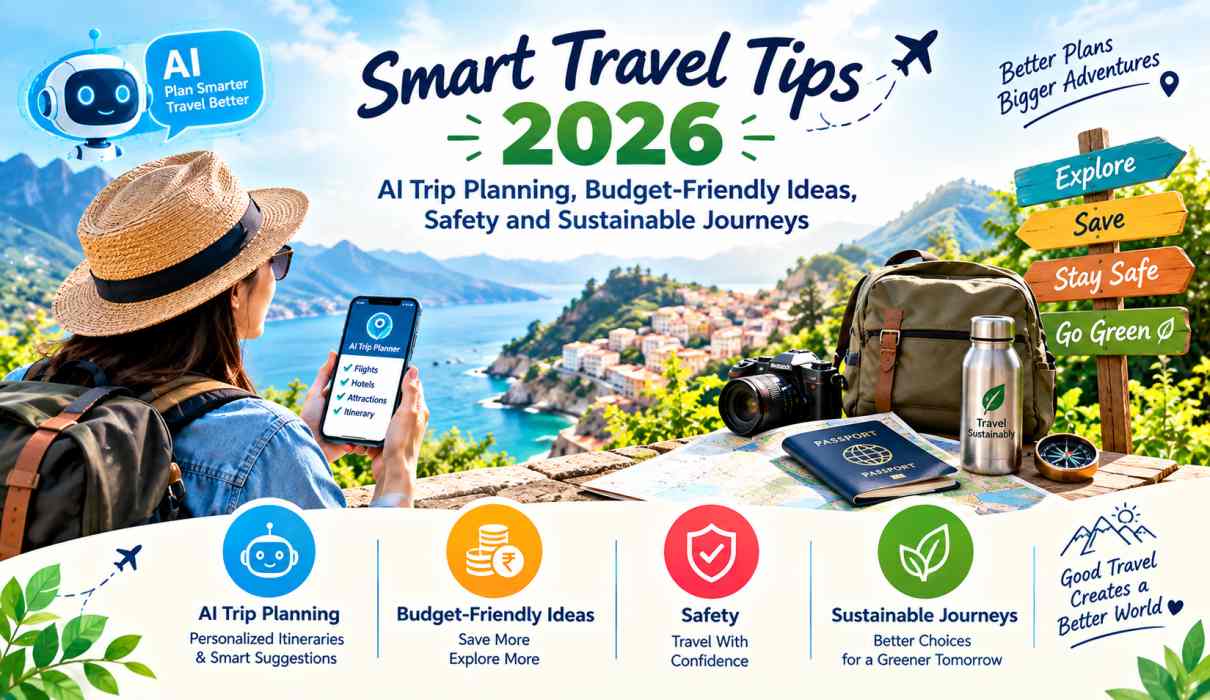
By Smart Travel Tips 2026: AI Trip Planning, Budget-Friendly Ideas, Safety and Sustainable Journeys
Travel in 2026 is becoming smarter, more personalized and more flexible than ever. New technology is changing how travelers search for destinations, plan itineraries, compare prices and manage their trips. At the same time, rising travel costs are encouraging people to become more careful with budgets, while sustainable tourism and responsible travel are becoming increasingly important.
Whether you are planning an international vacation, a weekend getaway, a family holiday or a solo adventure, the right travel strategy can make your journey easier and more enjoyable. From AI trip planning and budget-friendly travel ideas to safety practices and sustainable tourism, modern travelers have more tools available than ever before.
This guide explores the most useful smart travel tips for 2026 and explains how to plan better trips while saving money, staying safe and creating meaningful experiences.
1. Use AI to Plan Your Trip
One of the biggest travel trends in 2026 is the growing use of artificial intelligence for trip planning. AI-powered tools can help travelers organize destinations, attractions, transportation, accommodation and daily activities in one place.
Instead of spending hours searching through different websites, travelers can use AI tools to create an initial itinerary based on their interests, available time and budget.
For example, an AI-assisted travel plan can help organize:
- Places to visit
- Suggested daily itineraries
- Restaurants and local attractions
- Transportation options
- Estimated travel times
- Activities based on interests
- Budget categories
- Packing suggestions
AI should be treated as a planning assistant rather than the final authority. Travelers should verify important information such as opening hours, visa requirements, transportation schedules, local regulations and booking conditions before making decisions.
The smartest approach is to combine AI convenience with human judgment and reliable official information.
2. Create a Realistic Travel Budget
A good travel budget is one of the most important parts of successful trip planning.
Many travelers calculate only the cost of flights and hotels and forget about transportation, food, activities, travel insurance, shopping and unexpected expenses. A complete budget should include both planned and emergency spending.
Consider dividing your travel budget into categories such as:
- Flights or transportation
- Accommodation
- Food and drinks
- Local transportation
- Attractions and activities
- Travel insurance
- Visa or entry fees
- Shopping
- Emergency expenses
It is also useful to keep a small financial reserve for unexpected situations.
Budgeting does not necessarily mean choosing the cheapest option. Instead, it means spending money where it creates the most value while avoiding unnecessary expenses.
3. Travel During the Shoulder Season
One of the best ways to save money in 2026 is to consider shoulder-season travel.
Shoulder seasons fall between peak and off-peak periods. Depending on the destination, this may mean traveling shortly before or after the busiest tourist season.
Potential advantages include:
- Lower accommodation prices
- Better availability
- Fewer crowds
- More relaxed sightseeing
- Potentially lower transportation costs
- More authentic local experiences
However, travelers should always check the destination’s weather and seasonal conditions before booking.
A destination that is affordable during a particular month may have limited attractions, heavy rainfall or transportation disruptions. Smart planning means balancing price with comfort and experience.
4. Compare Flights and Accommodation Carefully
Price comparison remains an essential travel skill.
Do not automatically choose the first flight or hotel that appears in a search. Compare multiple options and look beyond the headline price.
A cheaper hotel may charge additional fees for breakfast, parking, transportation or other services. Similarly, a low-cost flight may have baggage restrictions or inconvenient connections.
When comparing accommodation, consider:
- Total price
- Location
- Transportation access
- Cancellation policy
- Reviews
- Included facilities
- Taxes and additional fees
For flights, consider the total journey rather than just the ticket price.
Sometimes paying slightly more for a convenient flight can save time, reduce stress and eliminate additional transportation costs.
5. Build Flexible Itineraries
Overplanning can make a holiday stressful.
A detailed itinerary can be useful, but travelers should leave some free time between activities. Unexpected discoveries are often part of the best travel experiences.
Instead of planning every hour, create a flexible structure:
Morning: Major attraction or activity
Afternoon: Local exploration or flexible activity
Evening: Food, entertainment or relaxation
This approach allows travelers to adjust plans when weather changes, attractions become crowded or a particularly interesting local experience appears.
Flexibility is especially valuable when traveling with children, older family members or larger groups.
6. Research Travel Safety Before Leaving
Travel safety should be part of trip planning rather than an afterthought.
Before visiting a destination, research local conditions, transportation systems, emergency contacts and common tourist risks.
Travelers should also understand basic local rules and customs.
Useful preparations include:
- Saving emergency contact numbers
- Keeping copies of important documents
- Sharing your itinerary with someone you trust
- Learning basic local phrases
- Checking official travel advisories
- Understanding local transportation
- Keeping important documents secure
Avoid relying entirely on social media posts for safety information. Official government and destination sources are generally more appropriate for important travel alerts and entry requirements.
7. Keep Digital and Physical Copies of Documents
Important travel documents should be accessible even if your phone is lost or your internet connection is unavailable.
Depending on the trip, travelers may need documents such as:
- Passport
- Visa
- Travel insurance information
- Flight reservations
- Hotel reservations
- Identification documents
- Emergency contacts
Keep secure digital copies and, where appropriate, physical backups.
Cloud storage can be useful, but travelers should ensure that sensitive documents are protected by strong passwords and appropriate account security.
8. Pack Light and Pack Smart
Smart packing can make a major difference to the travel experience.
Instead of packing for every possible situation, choose versatile clothing that can be used for multiple activities.
A practical packing list may include:
- Comfortable clothing
- Walking shoes
- Weather-appropriate outerwear
- Personal hygiene products
- Basic medicines and first-aid items
- Chargers and adapters
- Reusable water bottle
- Travel documents
- Small day bag
Before leaving, check the weather forecast and luggage rules for your airline or transportation provider.
Packing light can make airport transfers, public transportation and hotel changes much easier.
9. Use Technology Without Becoming Dependent on It
Smartphones are among the most useful travel tools available today.
Maps, translation apps, digital tickets, travel planners and communication services can simplify many aspects of a journey.
However, technology can fail. Phones can lose battery power, internet connections can disappear and apps can sometimes provide outdated information.
For important information, maintain offline backups.
Download maps where possible and keep essential booking information accessible without an internet connection.
A portable charger can also be valuable during long travel days.
10. Choose Sustainable Travel Options
Sustainable tourism is becoming increasingly important in modern travel.
Responsible travelers can reduce their environmental impact through relatively simple choices.
Consider:
- Using trains or public transportation where practical
- Walking or cycling for short distances
- Choosing accommodations with credible sustainability practices
- Carrying reusable items
- Reducing unnecessary plastic use
- Supporting local businesses
- Avoiding activities that harm wildlife
- Respecting natural areas
Sustainable travel is not about making every trip perfect. It is about making thoughtful decisions that benefit destinations, communities and the environment.
11. Support Local Businesses
Travel becomes more meaningful when visitors engage with local communities.
Instead of spending all your money with large international chains, consider supporting local restaurants, independent shops, local guides, artisans and small tourism businesses.
This can provide travelers with more authentic experiences while helping local economies.
Local businesses can also offer insights that are difficult to find in generic travel guides. A local restaurant owner, guide or shopkeeper may recommend places that are less crowded and more representative of the destination.
12. Explore Beyond Tourist Hotspots
Popular attractions are popular for a reason, but they are not the only places worth visiting.
In 2026, travelers increasingly have access to digital tools that can help discover lesser-known neighborhoods, attractions and experiences.
Instead of spending your entire trip at the most famous landmarks, consider exploring:
- Local markets
- Neighborhood cafés
- Regional museums
- Small cultural attractions
- Nature trails
- Local festivals
- Independent restaurants
- Community experiences
This can reduce pressure on overcrowded destinations and create a more personal travel experience.
However, travelers should avoid entering restricted or residential areas simply because they appear on social media.
13. Protect Your Money While Traveling
Financial safety is another important part of smart travel.
Carry multiple payment options instead of relying on a single card or payment method. Keep emergency cash in a secure location where appropriate.
When using ATMs, choose reputable machines and pay attention to transaction fees and currency-conversion options.
Travelers should also be cautious when using public Wi-Fi for sensitive financial transactions.
Before traveling internationally, check whether your bank needs to be informed about overseas transactions and understand potential foreign transaction fees.
14. Buy Travel Insurance
Travel insurance can provide financial protection against certain unexpected events.
Depending on the policy, coverage may include situations such as trip cancellation, medical emergencies, baggage problems or travel delays.
The right coverage depends on the destination, duration, activities and individual circumstances.
Before purchasing a policy, read the terms carefully rather than choosing one based solely on price. Understand exclusions, limits, deductibles and claim requirements.
For international travel, appropriate insurance can be particularly valuable because medical and emergency expenses can become expensive.
15. Plan for Weather and Climate Conditions
Weather can significantly affect travel.
Before departing, check the destination’s expected climate and consider seasonal risks such as extreme heat, storms, heavy rain, snow or wildfires.
Pack appropriately and keep some flexibility in your itinerary.
Climate-conscious planning can also improve comfort. Visiting outdoor attractions early in the morning or later in the afternoon may be preferable during hot weather.
Travelers should follow local authorities’ instructions if severe weather or natural hazards occur.
16. Make Food Experiences Part of the Journey
Food is an important part of tourism and cultural exploration.
Trying local cuisine can provide insight into a destination’s history, traditions and lifestyle.
However, travelers should consider food safety and individual dietary requirements.
If you have allergies or dietary restrictions, learn how to communicate them in the local language. When uncertain about food preparation or ingredients, ask before ordering.
Local food markets, family-owned restaurants and regional specialties can often become some of the most memorable parts of a holiday.
17. Respect Local Culture and Customs
Responsible travel requires cultural awareness.
Different destinations have different expectations regarding clothing, photography, greetings, religious sites, public behavior and personal space.
Before visiting, research basic cultural etiquette.
Simple actions such as learning a few local phrases, dressing appropriately and asking permission before photographing people can demonstrate respect.
Travelers should remember that a destination is not simply a backdrop for photographs. It is a place where people live, work and maintain cultural traditions.
18. Create a Balanced Travel Experience
The best holiday does not necessarily involve visiting the largest number of attractions.
A balanced trip includes sightseeing, relaxation, food, culture and personal time.
For example, a seven-day trip might include:
- Two days exploring major attractions
- One day focused on local culture
- One day for nature or outdoor activities
- One flexible day
- One relaxing day
- Time for spontaneous exploration
The right balance depends on the traveler.
Solo travelers may prefer flexibility, families may require more structured schedules, while adventure travelers may prioritize outdoor experiences.
19. Use AI Responsibly When Traveling
AI can make travel planning easier, but travelers should understand its limitations.
AI-generated recommendations may contain outdated information, inaccurate opening hours or suggestions that do not match current local conditions.
Use AI for brainstorming and organization, then verify important details using reliable sources.
A smart workflow is:
AI suggestion → independent research → official verification → booking
This approach provides the convenience of AI while reducing the risk of relying on incorrect information.
20. The Future of Smart Travel
The future of travel is likely to become increasingly connected and personalized.
AI trip planners, digital travel assistants, smart translation, personalized recommendations, mobile payments and connected travel services can make journeys more convenient.
At the same time, travelers are becoming more conscious of cost, sustainability, safety and the impact of tourism on local communities.
The most successful travelers in 2026 will not necessarily be those who use the most technology. They will be those who use technology intelligently while maintaining flexibility, awareness and responsibility.
Conclusion
The best smart travel tips for 2026 combine technology, careful budgeting, safety awareness and responsible tourism.
AI can help travelers plan itineraries and discover ideas. Budgeting can make holidays more affordable. Flexible schedules can reduce stress, while travel insurance and document preparation can provide additional protection. Sustainable choices and support for local communities can make journeys more responsible and meaningful.
Most importantly, smart travel is about finding the right balance between planning and spontaneity. Use modern tools to simplify your journey, but leave enough room to experience the destination naturally.
Whether you are planning a short domestic trip or an international adventure, these travel tips for 2026 can help you save money, stay prepared, travel responsibly and enjoy better holiday experiences.