
 By
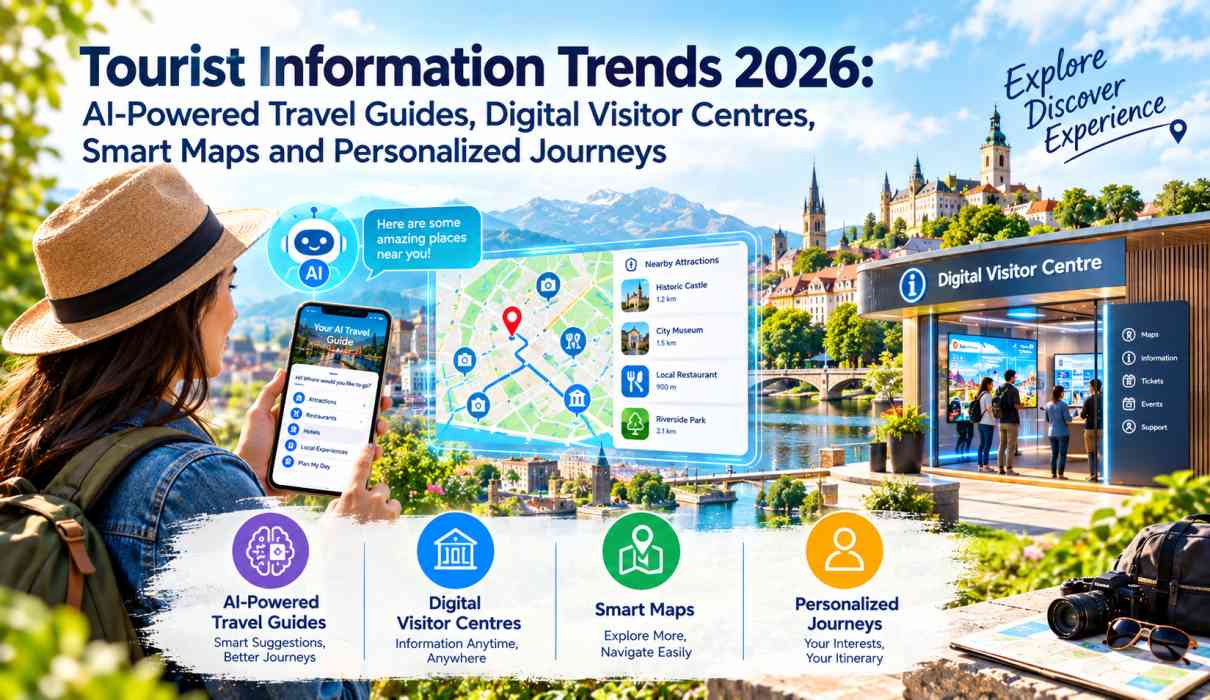
Tourist Information Trends 2026: AI-Powered Travel Guides, Digital Visitor Centres, Smart Maps and Personalized Journeys
Tourism is becoming increasingly digital, personalized and connected in 2026. Travelers no longer depend only on printed brochures, traditional guidebooks or physical tourist information offices to plan their journeys. Smartphones, artificial intelligence, interactive maps, real-time information and digital visitor services are transforming how people discover destinations and experience new places.
The modern traveler wants quick answers, accurate information and recommendations that match personal interests, budget, travel style and available time. Whether someone is planning a family holiday, exploring a city for a weekend, searching for local attractions or looking for sustainable travel options, digital technology is making tourist information more accessible.
One of the biggest developments is the rise of AI-powered travel guides. Artificial intelligence can help travelers organize itineraries, discover attractions, understand destinations and receive recommendations based on individual preferences. At the same time, digital visitor centres and smart maps are creating more connected tourism experiences.
This article explores the major tourist information trends in 2026 and explains how technology is changing travel planning, destination discovery and visitor services.
1. AI-Powered Travel Guides Are Transforming Tourism
Artificial intelligence is becoming one of the most important technologies in the tourism industry. AI-powered travel guides can provide personalized information based on a traveler’s interests, destination, budget, schedule and preferred activities.
Instead of searching through dozens of websites, travelers can use AI tools to ask questions in natural language.
For example, a traveler might ask for:
- A two-day city itinerary
- Family-friendly attractions
- Affordable restaurants
- Local cultural experiences
- Nature activities
- Accessible tourist attractions
- Things to do during rainy weather
- Attractions close to a hotel
- Sustainable travel options
AI can organize this information into a convenient travel plan.
The technology can also make recommendations more dynamic. If a traveler changes the available time or preferences, an AI travel assistant can potentially reorganize the itinerary.
However, AI should complement rather than completely replace official destination information. Travelers should still verify important details such as opening hours, ticket requirements, transportation changes and local regulations.
2. Digital Visitor Centres Are Becoming More Important
Traditional tourist information centres are evolving into digital visitor centres.
Instead of depending entirely on a physical desk, destinations can provide visitor information through websites, mobile applications, touchscreen kiosks, QR codes and virtual assistance.
A modern digital visitor centre may provide:
- Destination maps
- Attraction information
- Event calendars
- Public transportation details
- Accommodation information
- Restaurant recommendations
- Local experiences
- Accessibility information
- Emergency contacts
- Digital brochures
- Interactive travel planning
This creates a more flexible visitor experience because travelers can access information before, during and after their trip.
Physical visitor centres can also continue to play an important role, particularly for travelers who prefer personal assistance. The difference is that digital technology can extend their services beyond the physical location.
3. Smart Maps Are Changing Destination Exploration
Maps have always been essential to tourism, but smart maps are becoming much more sophisticated.
Modern digital maps can combine geographic information with attractions, transportation, restaurants, events, walking routes and other points of interest.
Travelers can use smart maps to discover what is available around them instead of planning every activity in advance.
For example, a visitor exploring a historic district might use a digital map to locate:
- Museums
- Heritage buildings
- Cafés
- Parks
- Public transport
- Tourist attractions
- Shopping areas
- Restrooms
- Tourist information points
Smart maps can also help travelers find alternative routes when roads are congested or public transportation changes.
For tourism organizations, interactive maps provide another way to showcase destinations and distribute useful visitor information.
4. Personalized Travel Experiences Are Growing
Personalization is becoming a major theme in tourist information trends 2026.
Travelers increasingly expect information to be relevant to their individual needs. A family with children, a solo backpacker and a luxury traveler may visit the same destination but require completely different information.
Personalized tourism services can consider factors such as:
- Age group
- Travel interests
- Budget
- Trip duration
- Mobility requirements
- Food preferences
- Activity levels
- Cultural interests
- Accommodation preferences
- Previous travel choices
A personalized travel platform could recommend a relaxed cultural itinerary to one visitor while suggesting outdoor adventures to another.
This makes destination information more useful and reduces the amount of time travelers need to spend searching through irrelevant content.
5. Real-Time Tourist Information Is Becoming Essential
Travel conditions can change quickly. Weather, transportation schedules, road conditions, attraction availability and local events can all affect travel plans.
For this reason, real-time information is becoming increasingly valuable.
Digital tourist information systems can provide updates about:
- Transportation delays
- Road closures
- Weather conditions
- Attraction changes
- Local events
- Temporary restrictions
- Emergency information
- Changes in opening hours
Real-time updates can help travelers make better decisions during their journeys.
Instead of following a fixed itinerary regardless of circumstances, visitors can adjust their plans according to current conditions.
6. Virtual and Augmented Reality Are Enhancing Destination Discovery
Virtual reality and augmented reality are creating new ways to explore tourist destinations.
Virtual reality can allow travelers to preview attractions before visiting them. Museums, heritage sites, hotels and tourism organizations can use immersive experiences to introduce destinations to potential visitors.
Augmented reality can add digital information to the physical environment through a smartphone or compatible device.
For example, a traveler standing near a historic building could use an AR application to view historical information, photographs, translations or interactive content.
These technologies can make sightseeing more educational and engaging.
They are particularly useful for cultural tourism because digital layers can explain the history and significance of locations without requiring large physical information boards.
7. Multilingual Tourist Information Is Expanding
International tourism brings together people who speak different languages. Providing information in multiple languages is therefore an important part of accessible tourism.
AI-assisted translation and multilingual digital platforms can help destinations communicate with a wider range of visitors.
Tourist information can be translated into:
- Attraction descriptions
- Transportation instructions
- Safety information
- Restaurant details
- Event information
- Cultural explanations
- Digital maps
- Visitor guides
Better multilingual services can make destinations easier to navigate and can help international visitors feel more comfortable.
However, automated translation should be reviewed carefully for important safety, legal and cultural information.
8. Voice Assistants Are Becoming Part of Travel
Voice technology is another emerging area in digital tourism.
Travelers often need information while walking, driving or carrying luggage. Voice-based assistants can make it easier to ask questions without typing.
A traveler might ask:
“What attractions are nearby?”
“How do I get to the city centre?”
“What can I visit in the next three hours?”
“Are there any museums open now?”
Voice interfaces can make tourist information more convenient, particularly when combined with location-based services.
As conversational AI continues to develop, travel assistants may become increasingly capable of understanding context and follow-up questions.
9. Sustainable Tourism Information Is Becoming More Visible
Sustainability is increasingly becoming part of destination information.
Travelers may want to know how their choices affect the environment and local communities. Tourism websites and visitor centres can help by providing information about sustainable transportation, local businesses, responsible tourism activities and environmentally friendly accommodation.
Tourist information platforms can highlight:
- Public transportation
- Walking routes
- Cycling routes
- Eco-friendly accommodation
- Local food
- Community-based tourism
- Nature conservation areas
- Responsible wildlife experiences
- Low-impact activities
Providing this information gives travelers more opportunities to make informed choices.
Sustainability can also benefit destinations by encouraging visitors to explore less crowded areas and distribute tourism activity more widely.
10. Digital Accessibility Is Becoming a Tourism Priority
Accessible tourist information is essential for creating inclusive travel experiences.
Digital platforms can provide detailed information about accessibility at hotels, attractions, transportation systems and public facilities.
Useful information may include:
- Wheelchair access
- Step-free entrances
- Accessible bathrooms
- Elevator availability
- Accessible transportation
- Visual or audio assistance
- Quiet areas
- Accessibility contact information
Clear information allows travelers to make decisions according to their individual requirements.
Accessibility should also be considered in the design of tourism websites and mobile applications so that digital information itself is easier to use.
11. Social Media Is Becoming a Tourist Information Channel
Social media continues to influence how travelers discover destinations.
Short videos, photographs, creator content and visitor recommendations can introduce travelers to attractions that may not appear in traditional guidebooks.
Tourism organizations can use social media to share:
- Destination highlights
- Seasonal attractions
- Local festivals
- Travel tips
- Events
- Cultural experiences
- Safety updates
- Visitor stories
However, travelers should distinguish promotional content from reliable destination information. Viral popularity does not necessarily mean an attraction is suitable for every visitor.
Official tourism websites and local information services remain valuable sources for verifying practical details.
12. Digital Tickets and Contactless Visitor Services
Another major development is the growth of digital visitor services.
Travelers can increasingly use smartphones for tickets, reservations, attraction entry and transportation.
Digital services can reduce the need for printed documents and simplify the visitor journey.
Examples include:
- Mobile attraction tickets
- Digital travel passes
- QR-code entry
- Online reservations
- Mobile event tickets
- Digital hotel information
- Cashless visitor services
These systems can make tourism more convenient while also giving destination operators useful information about visitor demand.
13. Data-Driven Tourism Planning
Tourism organizations are increasingly using data to understand visitor behavior and improve destination services.
Data can help identify:
- Popular attractions
- Busy travel periods
- Visitor movement patterns
- Frequently searched information
- Seasonal demand
- Popular activities
- Areas requiring additional services
When used responsibly and with appropriate privacy protections, data can support better destination planning.
For example, tourism managers may use visitor information to improve transportation, distribute tourism activity and provide better information during busy periods.
14. Hyperlocal Experiences Are Gaining Attention
Travelers are increasingly interested in experiences that go beyond famous landmarks.
Tourist information platforms can help visitors discover neighborhood cafés, local markets, craft workshops, cultural events, walking tours and community experiences.
This supports a broader idea of tourism where the destination is experienced through local culture rather than only major attractions.
Hyperlocal information can also help distribute visitor spending among smaller businesses and communities.
15. The Future of Tourist Information Is Connected and Intelligent
The future of tourist information is likely to combine several technologies rather than depend on one tool.
AI travel assistants, smart maps, digital visitor centres, real-time information, multilingual services, mobile applications and immersive technologies can work together to create a connected tourism ecosystem.
Imagine a traveler arriving in a new city. Their digital travel assistant could provide a personalized welcome, show nearby attractions on a smart map, explain public transportation options, recommend local experiences and provide real-time updates throughout the day.
This kind of connected experience could make travel planning simpler while giving visitors more freedom to explore.
How Travelers Can Use Tourist Information Technology in 2026
Travelers can make the most of modern tourist information by following a few simple practices:
Start with official sources: Use official tourism websites and visitor services to verify important information.
Use AI for planning: AI can help generate ideas and organize itineraries, but important details should be checked.
Explore smart maps: Interactive maps can reveal attractions and services close to your location.
Check real-time updates: Verify transportation, weather and attraction information before making important plans.
Look for local experiences: Digital platforms can help uncover cultural activities beyond major tourist attractions.
Consider accessibility: Check facilities and transportation options before visiting.
Protect personal information: Be selective about what information you provide to travel applications and online services.
Stay flexible: A digital itinerary should be a useful guide rather than a rigid schedule.
Conclusion
Tourist Information Trends 2026 demonstrate how technology is transforming the way people plan, discover and experience destinations. AI-powered travel guides can provide personalized recommendations, while digital visitor centres make destination information available across websites, apps and interactive platforms.
Smart maps are making exploration easier, real-time updates are helping travelers respond to changing conditions, and multilingual and accessible services are making tourism information more inclusive. At the same time, virtual reality, augmented reality, voice assistants and digital ticketing are creating new possibilities for connected travel experiences.
The future of tourist information is not simply about replacing traditional visitor services with technology. Instead, it is about combining human expertise with digital convenience.
Travelers will continue to value local knowledge, authentic experiences and personal assistance. Technology can enhance those experiences by making reliable information easier to find at the right time and in the right format.
As tourism continues to evolve in 2026 and beyond, destinations that provide accurate, personalized, accessible and engaging information can create more convenient experiences for visitors while supporting local communities and sustainable tourism.
The result is a new generation of smart tourism, where information is not just something travelers search for—it becomes an integrated part of the entire journey.