
 By
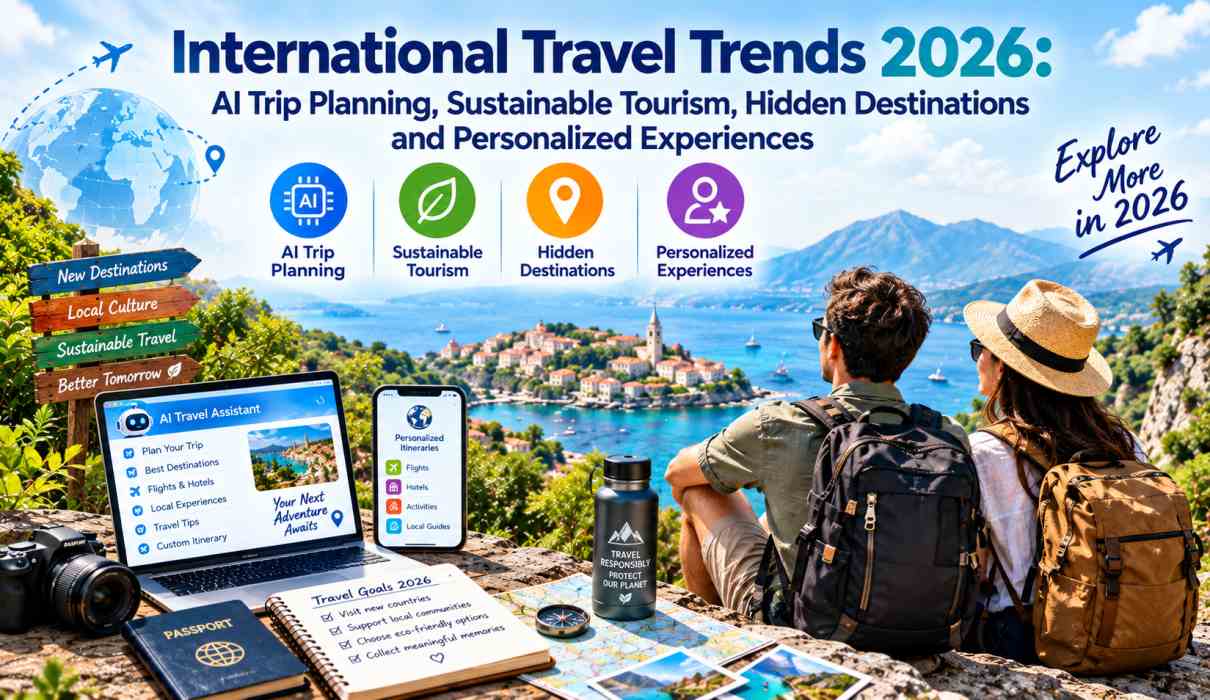
International Travel Trends 2026: AI Trip Planning, Sustainable Tourism, Hidden Destinations and Personalized Experiences
International travel is entering a new era in 2026. Travelers are becoming more selective about where they go, how they plan their journeys and what they expect from the travel experience. Technology is playing a larger role in trip planning, while sustainability, local culture, wellness and personalized experiences are becoming increasingly important.
One of the most noticeable changes is the growing use of artificial intelligence. Travelers can now use AI-powered tools to research destinations, build itineraries, compare options, discover attractions and organize complex journeys. At the same time, sustainable tourism is moving beyond simple environmental messaging toward responsible destination management, community participation and regenerative travel.
The International Travel Trends 2026 landscape is therefore defined by a combination of technology and human experience. Travelers want convenience and personalization, but they also want authentic connections, better value and experiences that feel meaningful.
According to Mastercard’s 2026 Travel Trendline, based on a survey of more than 15,000 consumers across 10 countries including India, travelers are increasingly using AI, paying attention to exchange rates, traveling solo and combining business trips with leisure.
1. AI Trip Planning Is Becoming Mainstream
Artificial intelligence is one of the biggest trends transforming international travel in 2026.
Instead of spending hours searching through dozens of websites, travelers can increasingly use AI assistants to create personalized travel plans based on their budget, interests, preferred travel style and available time.
An AI travel assistant can help with tasks such as:
- Destination research
- Itinerary planning
- Hotel and accommodation comparisons
- Restaurant suggestions
- Transportation planning
- Activity recommendations
- Budget planning
- Packing lists
- Language assistance
- Local attraction discovery
A 2026 IMG Travel Outlook survey found that 33% of respondents were likely to use AI tools for travel planning, with recommendations and itinerary planning among the most common expected uses.
AI is also becoming particularly relevant for travelers looking for lesser-known destinations. Instead of simply asking for the most popular attractions, users can request quiet neighborhoods, local experiences, alternative destinations and activities suited to specific interests.
However, travelers should still verify important information such as visa requirements, entry rules, opening hours, transportation schedules and booking conditions through reliable official sources.
2. Personalized Travel Experiences Are Growing
Personalization is another major international travel trend in 2026.
Modern travelers increasingly expect trips to reflect their individual preferences rather than following a generic tourist itinerary. A traveler interested in food may want a culinary-focused journey, while another may prefer hiking, wellness, architecture, shopping, photography or cultural experiences.
AI and digital travel platforms are making this type of personalization easier.
Travel planning can increasingly consider factors such as:
- Travel budget
- Preferred pace
- Dietary requirements
- Accessibility needs
- Family or solo travel
- Cultural interests
- Adventure preferences
- Wellness goals
- Preferred accommodation style
The OECD’s 2026 tourism report notes that digitalization and AI are creating opportunities for more personalized tourism services while also helping destinations improve visitor management and operational efficiency.
This means personalization is becoming more than a marketing feature. It is increasingly influencing how travelers discover, organize and experience destinations.
3. Hidden Destinations and Alternative Tourism Are Gaining Attention
International travelers are increasingly interested in destinations beyond the world’s most famous tourist cities.
Popular destinations remain important, but overcrowding can affect accommodation prices, transportation, local communities and the overall visitor experience. This is encouraging travelers to consider smaller cities, rural areas, secondary destinations and less-visited regions.
The growing interest in hidden destinations can create several benefits. Travelers may experience a quieter environment, discover local traditions and distribute tourism spending more widely.
Destination authorities are also paying greater attention to visitor distribution. The OECD reports that concentrated visitor flows are putting pressure on infrastructure and communities in some destinations, while less-visited destinations can miss out on tourism benefits.
For travelers, this creates an opportunity to explore beyond conventional tourist routes.
Instead of visiting only a country’s most famous city, travelers can consider nearby towns, regional cultural centers, coastal communities, mountain villages or rural destinations.
4. Sustainable Tourism Is Becoming More Practical
Sustainable tourism continues to be one of the defining themes of international travel in 2026.
The focus is increasingly expanding beyond simply choosing an eco-friendly hotel. Sustainable travel can involve transportation choices, accommodation, food, wildlife experiences, waste reduction and supporting local businesses.
Travelers are becoming more interested in questions such as:
- Does tourism benefit local communities?
- Are natural environments being protected?
- Can visitor numbers be managed responsibly?
- Are local businesses involved?
- Is wildlife tourism ethical?
- Does accommodation use resources efficiently?
The OECD’s 2026 tourism report emphasizes the need to balance economic, social and environmental outcomes while improving resilience and managing visitor flows.
This suggests that sustainable tourism is increasingly becoming a destination-management issue rather than simply an individual consumer choice.
5. Regenerative Travel Goes Beyond Sustainability
A related development is the rise of regenerative travel.
Traditional sustainability often focuses on reducing negative environmental effects. Regenerative tourism goes further by asking how travel can actively contribute to environmental restoration and local communities.
Examples can include:
- Conservation-focused tourism
- Wildlife protection projects
- Community-led tourism
- Indigenous tourism initiatives
- Rewilding projects
- Local food systems
- Nature restoration
- Supporting small local businesses
Travel industry coverage in 2026 highlights a shift toward experiences intended not merely to reduce harm but to contribute positively to nature and local economies.
For travelers, this can make sustainability more tangible. Rather than simply choosing a label such as “eco-friendly,” they can look for experiences where tourism revenue clearly supports conservation or local communities.
6. Value and Affordability Are Influencing Destination Choices
Travelers are also becoming more strategic about their budgets.
International travel can be expensive, particularly when airfare, accommodation, food, transportation and currency exchange rates are considered together. In 2026, travelers are increasingly looking at the overall value of a destination rather than simply choosing based on popularity.
Mastercard’s 2026 research describes favorable exchange rates as an increasingly important factor in destination decisions and reports that many travelers are using AI specifically to save money.
This can encourage travelers to:
- Compare travel dates
- Consider shoulder seasons
- Choose alternative airports
- Explore destinations with favorable exchange rates
- Compare accommodation types
- Use rail and public transportation
- Combine multiple experiences in one trip
- Stay longer where the overall value is better
Budget-conscious travel does not necessarily mean sacrificing quality. Smart planning can allow travelers to prioritize experiences that matter most to them.
7. Slow Travel and Longer Experiences
Fast-paced tourism is being balanced by growing interest in slower, more intentional journeys.
Instead of visiting five cities in seven days, some travelers are choosing to spend more time in one region. Slow travel can provide opportunities to understand local culture, use public transportation, explore neighborhoods and build deeper connections with destinations.
Rail travel is particularly relevant to this trend. Travel industry reporting in 2026 identifies growing interest in rail journeys as travelers look for scenic and potentially more sustainable alternatives to some forms of transportation.
Longer stays can also benefit local economies because visitors may spend more time using restaurants, independent shops, cultural attractions and local services.
8. Solo International Travel Continues to Evolve
Solo travel remains an important part of international tourism.
Digital tools are making independent travel easier by helping travelers navigate unfamiliar destinations, translate languages, find transportation and research activities.
AI can also assist solo travelers with itinerary planning and destination discovery. Mastercard’s 2026 research found that solo travelers showed particularly high openness to allowing AI to assist with travel decisions.
Safety remains important, particularly for first-time solo travelers. Travelers should research local laws, transportation options, emergency contacts and accommodation locations before departure.
9. Wellness and Meaningful Experiences
International travel is increasingly connected with personal wellbeing.
Travelers are looking for experiences that help them relax, recharge and pursue personal interests. Wellness travel can include spa experiences, yoga retreats, nature-based journeys, fitness holidays, meditation programs and healthy culinary experiences.
At the same time, travelers are increasingly interested in meaningful cultural experiences.
Rather than simply photographing famous landmarks, visitors may want to learn traditional crafts, participate in local food experiences, visit community projects or explore regional history.
The 2026 travel landscape is therefore increasingly about why people travel, not just where they travel. FINN Partners’ 2026 TrendHawk report describes this shift toward more intentional, personalized and experience-driven travel.
10. Digital Travel Tools Are Improving the Journey
Technology is becoming part of almost every stage of international travel.
Before departure, travelers can use digital tools for research, booking and itinerary management. During a trip, smartphones can provide navigation, translation, digital tickets, payment options and real-time information.
Digital tools can also help destinations manage visitor flows and respond to changing conditions.
The OECD notes that tourism organizations are increasingly investing in data, digitalization and AI to support better decision-making and more effective destination management.
However, travelers should not become completely dependent on technology. Keeping offline copies of important documents, having backup payment methods and knowing basic emergency procedures remain useful.
11. AI and Sustainable Travel Can Work Together
AI is not only changing how travelers plan trips; it could also support more sustainable tourism.
AI-powered systems can analyze visitor patterns and help destinations anticipate congestion. Travel recommendations can potentially direct visitors toward less crowded attractions and alternative destinations.
Research published in 2026 identifies applications including predictive analytics for overtourism management, personalized sustainable recommendations and resource optimization as potential ways AI could contribute to sustainable tourism. The research also emphasizes risks such as privacy, algorithmic bias and unequal access to technology.
This makes responsible implementation important. Technology alone does not automatically make tourism sustainable. Its results depend on data quality, governance, local participation and how the technology is used.
12. Authentic Local Experiences Matter More
Another major trend is the search for authenticity.
Travelers increasingly want experiences that feel connected to the destination rather than standardized activities that could happen anywhere.
Local markets, regional cuisine, traditional arts, neighborhood walking tours, community events and independent businesses can provide deeper connections with a place.
This trend can also support local economies when travelers spend money with locally owned businesses.
For travelers, researching local guides, small businesses and community-led experiences can be an effective way to make a trip more distinctive while supporting the destination.
13. How to Plan an International Trip in 2026
A smart international travel strategy can combine technology with traditional research.
Start by identifying the purpose of the trip and the experiences that matter most. Then use AI tools to generate ideas and compare possible destinations.
Next, verify important information through official sources and reputable travel providers. Check passport validity, visa requirements, travel advisories, health requirements, transportation schedules and accommodation policies.
Travelers can also improve their experience by:
- Setting a realistic total budget.
- Comparing several travel dates.
- Considering lesser-known destinations.
- Using AI for itinerary ideas rather than blindly accepting recommendations.
- Researching local customs and cultural etiquette.
- Choosing responsible tourism providers.
- Supporting locally owned businesses.
- Building flexibility into the itinerary.
- Keeping essential documents available offline.
- Leaving room for spontaneous experiences.
The goal is not to create the busiest possible itinerary. It is to create a journey that matches personal interests, budget and travel priorities.
The Future of International Travel
The future of international travel will likely be shaped by the combination of artificial intelligence, personalization, sustainability and human connection.
AI will make travel research and itinerary creation faster. Digital platforms will provide increasingly personalized recommendations. Destinations will continue exploring technology for visitor management, sustainability and better services.
At the same time, travelers are likely to continue searching for something technology cannot completely replace: authentic human experiences.
Local food, cultural interaction, nature, community, discovery and personal memories remain at the heart of travel.
Conclusion
International Travel Trends 2026 demonstrate how quickly the global travel experience is changing. AI trip planning is making it easier to discover destinations and build personalized itineraries, while sustainable tourism is becoming increasingly important for travelers, businesses and destination authorities.
Hidden destinations, slow travel, solo journeys, wellness experiences and authentic local activities are also reshaping what people expect from international holidays. At the same time, travelers are becoming more conscious of value, exchange rates and the overall impact of their journeys.
The most important trend may be the movement toward smarter and more meaningful travel. Technology can help travelers plan better, save time and discover new possibilities, while responsible choices can help protect destinations and support local communities.
In 2026, international travel is not simply about visiting more places. It is increasingly about choosing the right destination, traveling with greater awareness and creating personalized experiences that remain memorable long after the journey ends.