
 By
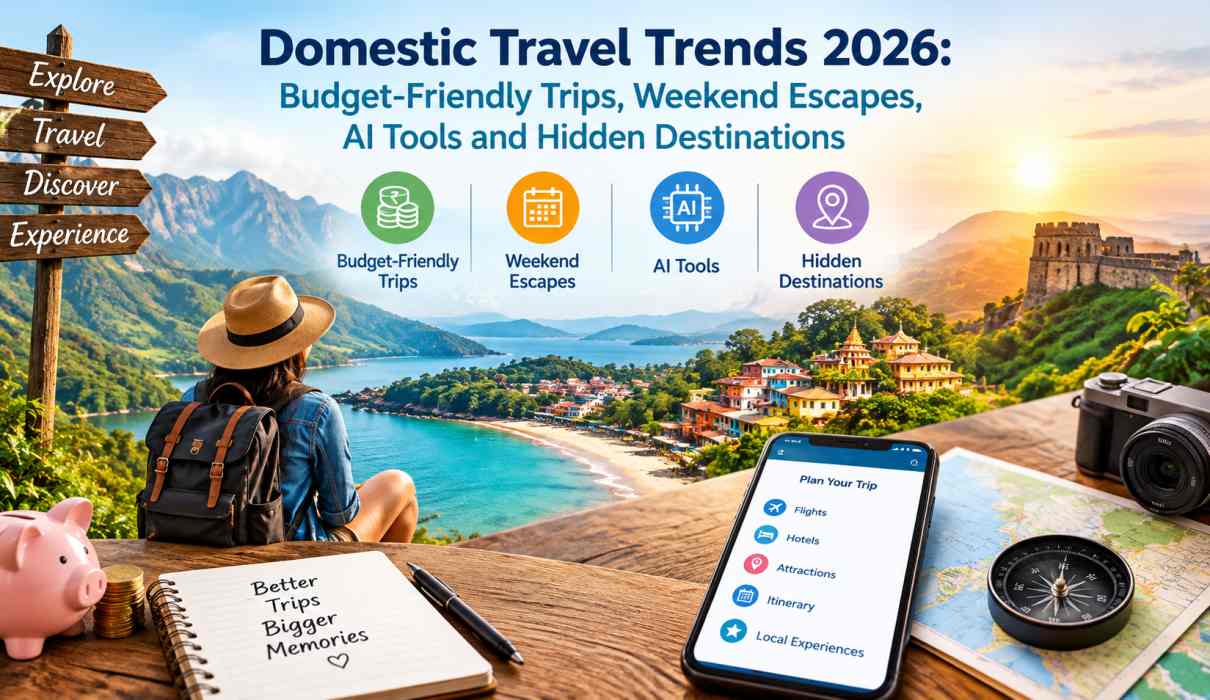
Domestic Travel Trends 2026: Budget-Friendly Trips, Weekend Escapes, AI Tools and Hidden Destinations
Domestic travel is becoming more dynamic in 2026 as travelers look for meaningful experiences without the cost, complexity, and long planning cycles often associated with international holidays. From quick weekend escapes and affordable road trips to AI-powered itineraries and lesser-known destinations, the way people explore their own countries is changing rapidly.
In India, domestic tourism continues to benefit from improved connectivity, digital travel services, expanding accommodation choices, and growing interest in regional experiences. Travelers are increasingly combining convenience with discovery, choosing destinations that offer nature, culture, food, adventure, wellness, and memorable experiences.
The domestic travel trends of 2026 reflect a broader shift toward smarter, shorter, more flexible, and experience-focused journeys. Whether planning a family holiday, a solo trip, a romantic getaway, or a weekend adventure, travelers now have more tools and options than ever.
1. The Rise of Budget-Friendly Domestic Travel
One of the most important domestic tourism trends in 2026 is the growing focus on affordable travel. Travelers are becoming more conscious of total trip costs, including transportation, accommodation, food, activities, and local travel.
Instead of waiting for one expensive annual holiday, many travelers are choosing several smaller trips throughout the year. This approach makes travel easier to fit around work, education, family responsibilities, and personal budgets.
Budget domestic travel does not necessarily mean compromising on experiences. Travelers can reduce expenses by:
- Booking transportation early
- Traveling during shoulder or off-peak periods
- Choosing homestays and guesthouses
- Comparing hotel and accommodation options
- Using public transportation where practical
- Planning free or low-cost attractions
- Choosing nearby destinations for short breaks
- Combining multiple attractions in one trip
The growth of digital booking platforms also makes it easier to compare prices and discover deals. As a result, affordable domestic holidays are becoming accessible to a wider range of travelers.
2. Weekend Escapes Become a Major Travel Choice
The traditional week-long vacation is increasingly being complemented by shorter breaks. Weekend getaways in 2026 are particularly attractive to professionals, couples, students, and families who want to travel without taking many days away from their regular schedules.
A two- or three-day trip can provide a refreshing change of environment without requiring extensive planning.
Popular weekend travel experiences include:
- Mountain retreats
- Beach destinations
- Forest stays
- Heritage towns
- Wildlife experiences
- Wellness resorts
- Rural tourism
- Food-focused trips
- Adventure activities
The growth of short-distance tourism is also encouraging travelers to explore destinations closer to home. A location that was previously overlooked may become attractive when travelers begin valuing convenience and authentic experiences.
Weekend travel also supports local businesses, including small hotels, restaurants, guides, transport operators, artisans, and activity providers.
3. AI Is Changing How People Plan Domestic Trips
Artificial intelligence is becoming an increasingly useful travel-planning tool in 2026. Travelers can use AI-powered services to research destinations, organize itineraries, compare options, generate packing lists, and find activities based on personal interests.
Instead of spending hours searching across multiple websites, travelers can use digital tools to create an initial travel plan based on factors such as:
- Budget
- Trip duration
- Preferred transportation
- Travel companions
- Interests
- Weather preferences
- Food choices
- Activity levels
For example, someone planning a three-day domestic trip could ask an AI travel assistant to create a schedule covering transportation, accommodation areas, sightseeing, local food, and free time.
However, AI-generated travel information should still be checked against current official or reliable sources. Opening hours, transportation schedules, weather conditions, local regulations, prices, and availability can change.
The role of AI is therefore best understood as a planning assistant, rather than a replacement for traveler judgment.
4. Hidden Destinations Gain Attention
Another important trend is the growing interest in hidden and lesser-known destinations.
Popular tourist attractions can be exciting, but overcrowding, higher prices, and long queues can reduce the quality of a trip. As travelers search for quieter alternatives, smaller towns, villages, regional landscapes, and less-publicized attractions are receiving more attention.
Hidden destinations can offer:
- Fewer crowds
- More peaceful surroundings
- Authentic local experiences
- Lower accommodation costs
- Regional food
- Traditional crafts
- Nature-based activities
- Opportunities for photography
Social media and travel communities are contributing to this trend. A destination that receives attention through a short video, photograph, or travel story can quickly become part of the mainstream travel conversation.
At the same time, responsible tourism is important. Travelers should respect local communities, avoid damaging natural environments, follow local rules, and contribute to local economies.
5. Experience Matters More Than Simply Visiting a Place
Domestic tourism in 2026 is increasingly experience-driven. Travelers are not only asking, “Where should I go?” They are also asking, “What can I experience there?”
This shift is creating demand for activities such as:
- Local cooking classes
- Village experiences
- Handicraft workshops
- Nature walks
- Wildlife observation
- Cycling
- Trekking
- Cultural festivals
- Heritage tours
- Farm stays
- Wellness retreats
Food tourism is another strong example. Travelers increasingly want to discover regional dishes, local markets, traditional cooking techniques, and specialty foods.
These experiences can make a short trip feel more meaningful without requiring a large travel budget.
6. Road Trips and Self-Drive Holidays Continue to Grow
Road travel remains an attractive option for domestic tourists who value flexibility. A road trip allows travelers to stop at scenic locations, explore smaller towns, and adjust their schedule more easily.
In 2026, road trips can range from short weekend drives to longer multi-state journeys.
Successful road-trip planning should consider:
- Road conditions
- Fuel availability
- Weather
- Vehicle maintenance
- Parking
- Accommodation
- Emergency contacts
- Travel time
- Local regulations
Travelers should avoid trying to cover too many destinations in a short period. A relaxed itinerary can often produce a better experience than an overly ambitious schedule.
For families and groups, road travel can also make transportation costs easier to manage when shared among several people.
7. Sustainable Domestic Tourism Becomes More Important
Sustainability is increasingly influencing travel decisions. Domestic tourism can reduce some of the logistical complexity associated with international travel, but responsible practices remain important.
Travelers are becoming more conscious of how tourism affects local communities and natural environments.
Sustainable domestic travel can include:
- Supporting locally owned businesses
- Reducing single-use plastic
- Avoiding litter
- Using public transportation when practical
- Respecting wildlife
- Choosing responsible accommodation
- Conserving water and energy
- Buying locally produced goods
- Following protected-area rules
The goal is not simply to visit a destination but to leave a positive or minimal-impact footprint.
8. Regional and Cultural Tourism Expands
Travelers are increasingly interested in understanding the culture of their own country. This includes regional traditions, architecture, festivals, music, crafts, food, languages, and historical sites.
India, in particular, offers enormous possibilities for cultural tourism because different regions have distinct traditions and landscapes.
A domestic trip can become an opportunity to discover:
- Traditional architecture
- Regional cuisines
- Local festivals
- Historic neighborhoods
- Museums
- Handicrafts
- Folk art
- Indigenous traditions
- Religious and heritage sites
Cultural tourism can also distribute tourism spending beyond major metropolitan destinations and internationally recognized attractions.
9. Digital Travel Services Make Trips More Convenient
Technology now influences almost every stage of domestic travel.
Travelers can use smartphones for:
- Digital tickets
- Online hotel bookings
- Maps and navigation
- Digital payments
- Translation
- Restaurant discovery
- Travel reviews
- Weather updates
- Travel documentation
- Emergency communication
Contactless payments and mobile booking services have reduced the need to carry large amounts of cash or visit physical travel offices.
Digital tools are particularly useful during short trips because travelers can make changes quickly when schedules, weather, or availability change.
However, travelers should keep essential information available offline when traveling to areas with limited connectivity.
10. Wellness and Slow Travel Become Popular
Modern travel is increasingly connected with personal wellbeing. Instead of filling every hour with sightseeing, some travelers are choosing slower itineraries focused on relaxation and mental refreshment.
Wellness-focused domestic trips may include:
- Yoga retreats
- Nature stays
- Spa experiences
- Meditation programs
- Forest retreats
- Beach relaxation
- Mountain stays
- Healthy food experiences
Slow travel emphasizes quality over quantity. Instead of visiting five destinations in three days, travelers may spend several days exploring one location at a comfortable pace.
This approach can also support local communities because visitors often spend more time using local services.
11. Family and Multi-Generational Travel
Family travel continues to evolve in 2026. Multi-generational trips involving children, parents, and grandparents require destinations that balance different needs.
Travelers increasingly look for accommodations and destinations offering:
- Comfortable transportation
- Family-friendly rooms
- Accessible attractions
- Convenient dining
- Medical facilities nearby
- Activities for different age groups
- Flexible schedules
Domestic travel can be particularly convenient for multi-generational families because shorter travel distances may reduce physical and logistical challenges.
12. How to Plan a Smart Domestic Trip in 2026
Planning does not have to be complicated. A simple process can help travelers control both time and spending.
Step 1: Set a realistic budget
Calculate transportation, accommodation, food, activities, shopping, and emergency expenses.
Step 2: Choose the right trip length
A two-day weekend trip may be enough for a nearby destination, while a longer journey can justify a more distant location.
Step 3: Research transportation
Compare trains, buses, flights, rental cars, and private vehicles based on cost and convenience.
Step 4: Use AI for initial planning
AI tools can help generate itinerary ideas, but verify important information through official sources.
Step 5: Research local experiences
Look beyond famous attractions and investigate local food, markets, cultural activities, nature experiences, and smaller attractions.
Step 6: Leave flexibility in the schedule
Avoid planning every minute. Unexpected discoveries are often part of the best travel experiences.
Step 7: Travel responsibly
Respect local communities, cultural practices, wildlife, and natural environments.
The Future of Domestic Travel in 2026
The future of domestic tourism is likely to be shaped by a combination of technology, affordability, flexibility, sustainability, and personalization.
AI will make trip research more efficient. Digital platforms will simplify bookings. Better connectivity can make more destinations accessible. Social media will continue introducing travelers to lesser-known places, while sustainability will influence accommodation and transportation choices.
At the same time, travelers are likely to continue searching for authentic experiences rather than simply collecting destination checklists.
The biggest opportunity for domestic tourism may therefore lie beyond the country’s most famous attractions. Smaller destinations, regional communities, local businesses, nature-based experiences, and cultural tourism can all play an important role in the next stage of travel growth.
Conclusion
Domestic Travel Trends 2026 show how travel is becoming more flexible, affordable, digital, and experience-focused. Budget-friendly holidays, weekend escapes, AI-powered planning, road trips, sustainable tourism, cultural experiences, wellness travel, and hidden destinations are reshaping the way people explore closer to home.
For travelers, this means there are more ways to enjoy meaningful holidays without necessarily spending a large amount of money or taking extended time away from everyday life.
The smartest approach is to combine technology with human judgment: use AI and digital tools to research and organize a trip, verify important information independently, remain flexible, and respect the communities and environments being visited.
Whether it is a quiet weekend in nature, a cultural journey through a historic town, a family road trip, or an affordable local adventure, domestic travel in 2026 offers opportunities to discover new experiences closer to home.