
 By
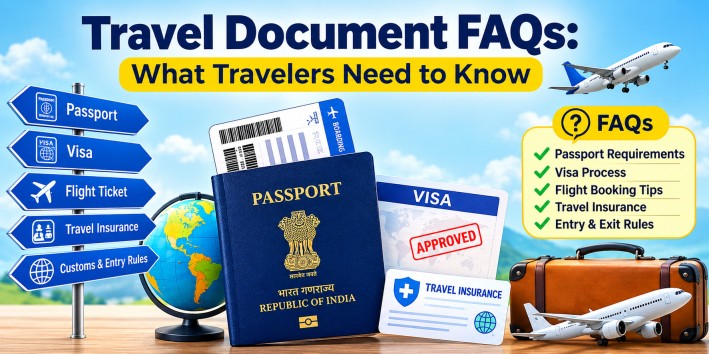
By Planning an international trip involves more than booking flights and choosing a hotel. One of the most important parts of travel preparation is making sure you have the right travel documents. A valid passport, visa, travel insurance, identification, and other supporting documents can determine whether your journey goes smoothly or becomes stressful at the airport.
Whether you are traveling abroad for the first time or are an experienced traveler, understanding travel document requirements can help you avoid unnecessary delays and last-minute problems.
In this guide, we answer some of the most common travel document FAQs and explain what travelers should know before leaving home.
What Are Travel Documents?
Travel documents are official papers or digital records that prove your identity, nationality, eligibility to enter a country, or purpose of travel. The documents you need depend on your destination, nationality, length of stay, and reason for traveling.
Common travel documents include:
- Passport
- Visa or electronic travel authorization
- National identity card
- Travel insurance documents
- Flight tickets or booking confirmations
- Hotel or accommodation confirmations
- Proof of sufficient funds
- Vaccination or health certificates when required
- Invitation letters or business documents
- Parental consent letters for minors
Not every traveler needs every document on this list. Always check the entry requirements of your destination before traveling.
Why Are Travel Documents Important?
Travel documents help authorities verify who you are and whether you meet the requirements for entering or leaving a country. Airlines may also check your documents before allowing you to board.
Even if you have a confirmed flight and hotel reservation, you may be denied boarding if your passport is expired, your visa is missing, or your documents do not meet the destination’s requirements.
Preparing your documents in advance can help you:
- Avoid airport delays
- Prevent denied boarding
- Reduce immigration problems
- Meet visa requirements
- Prove your identity
- Access emergency assistance more easily
- Travel with greater confidence
Do I Need a Passport for International Travel?
In most cases, yes. A passport is the primary identification and travel document for international travel. It confirms your identity and nationality and is generally required when crossing international borders.
Some countries have agreements that allow citizens to travel using national identity cards instead of passports. However, these rules vary by country and nationality.
Before your trip, check:
- Whether your destination requires a passport
- How long your passport must remain valid
- Whether your passport has enough blank pages
- Whether the name on your passport matches your booking
- Whether your passport is damaged
A passport that is valid on the date of travel may still not meet your destination’s requirements if the country requires several months of remaining validity.
How Long Should My Passport Be Valid?
Passport validity requirements vary by destination. Some countries require your passport to remain valid for a specific period after your planned arrival or departure date.
A commonly encountered requirement is six months of passport validity, although this is not a universal rule.
For example, if your passport expires shortly after your planned return, you could face problems even though it is technically valid on your departure date.
The safest approach is to check the official entry requirements of your destination before booking your trip. If your passport is close to expiration, consider renewing it before traveling.
Do I Need a Visa to Travel?
Whether you need a visa depends on your nationality, destination, purpose of travel, and duration of stay.
Countries may offer different entry arrangements, including:
- Visa-free travel
- Visa on arrival
- Electronic visas (e-Visas)
- Electronic travel authorizations
- Traditional embassy-issued visas
- Transit visas
A tourist visa may have different requirements from a student, work, business, or long-stay visa.
Never assume that because someone from another country can enter visa-free, you can do the same. Visa requirements are often based on the traveler’s nationality and individual circumstances.
What Is an E-Visa?
An e-Visa is an electronic visa that travelers can usually apply for online. Instead of receiving a traditional visa sticker or stamp in a passport before departure, the traveler receives an electronic approval.
Depending on the country, you may need to provide:
- Passport information
- A recent photograph
- Travel details
- Accommodation information
- Personal information
- Supporting documents
- Payment for the visa fee
Even when an e-Visa is electronically linked to your passport, it is wise to keep a copy of the approval available while traveling.
What Is an Electronic Travel Authorization?
An electronic travel authorization, sometimes called an ETA or a similar term, is different from a traditional visa. It is generally a pre-travel authorization for eligible travelers who may otherwise be able to enter without obtaining a conventional visa.
The exact rules differ by country.
An authorization may be linked electronically to your passport, meaning that changing or renewing your passport can affect the authorization.
Always use the official government website when applying for an electronic travel authorization and verify the information before submitting your application.
Do I Need Travel Insurance Documents?
Travel insurance is not universally mandatory, but some destinations may require travelers to have specific insurance coverage.
Even where it is not required, travel insurance can provide financial protection against certain unexpected events, depending on the policy.
Your insurance documentation may include:
- Policy number
- Emergency contact information
- Coverage details
- Medical assistance information
- Claims instructions
- Trip cancellation coverage
- Baggage coverage
Keep your policy details accessible during your trip rather than storing them only in checked luggage.
Should I Carry Printed Copies of My Travel Documents?
Yes. Digital documents are convenient, but carrying printed copies can be useful if your phone runs out of battery, you lose internet access, or a digital file cannot be opened.
Consider keeping copies of:
- Passport identification page
- Visa or travel authorization
- Travel insurance policy
- Flight itinerary
- Hotel reservations
- Emergency contact information
- Important medical or prescription information, where applicable
Keep the copies separate from your original documents. You can also store secure digital backups in an account you can access while traveling.
Can I Travel If My Name on My Ticket Is Different From My Passport?
A mismatch between your flight booking and passport can create problems, particularly when the difference is significant.
Airlines and border authorities generally rely on your passport as your official identity document. Your ticket should normally reflect your name accurately.
Small formatting differences may be handled differently by airlines, but travelers should not assume they will be accepted.
If you notice a spelling error, missing name, or other significant difference, contact your airline or booking provider as soon as possible.
Do not wait until the day of departure to resolve a document mismatch.
What Documents Do Children Need for International Travel?
Children generally need their own travel documents for international travel. Depending on the destination and circumstances, this may include a passport, visa, and additional consent documentation.
If a child is traveling with only one parent, relatives, guardians, or another adult, authorities may request additional evidence showing that the travel is authorized.
A parental consent letter may be useful or required in certain situations.
Requirements vary significantly, so parents and guardians should check the rules of both the destination country and any countries where the child will transit.
What Documents Should I Carry for a Business Trip?
Business travelers may need additional documents depending on the purpose of the visit and destination.
Potential documents include:
- Business visa or work authorization
- Employer letter
- Invitation letter from a business partner
- Conference registration
- Meeting details
- Accommodation confirmation
- Return or onward ticket
- Proof of financial support
Importantly, a tourist visa does not automatically allow business activities in every country. The permitted activities can vary, so check the relevant immigration rules before traveling.
What Documents Are Needed for Transit?
Transit requirements can be overlooked when planning international travel. You may need documentation for a country even if you are only changing planes there.
Depending on your nationality, itinerary, airport, and whether you leave the transit area, you may require a transit visa or other authorization.
When planning a journey with connections, check the requirements for:
- Your departure country
- Your destination country
- Every transit country
- Your airline’s boarding requirements
A connecting flight does not necessarily mean you are exempt from immigration or visa rules.
What Should I Do If I Lose My Passport Abroad?
Losing your passport while traveling can be stressful, but taking immediate action can help.
First, report the loss or theft to the local authorities if appropriate. Then contact your country’s nearest embassy or consulate for guidance on obtaining an emergency travel document or replacement passport.
You may be asked to provide supporting information such as:
- Proof of identity
- A copy of your lost passport, if available
- Passport photographs
- Police report, where required
- Proof of travel plans
- Applicable fees
This is one reason why keeping a secure copy of your passport information can be extremely helpful.
Can I Keep Travel Documents on My Phone?
Digital copies can be useful, but they should not always replace original documents.
Some visas, tickets, reservations, and authorizations may be accepted digitally, while other documents may need to be presented in physical form.
A good approach is to use a combination of:
- Original documents
- Printed copies
- Secure digital copies
Before departure, download important documents so you can access them without relying on airport or hotel Wi-Fi.
How Should I Organize My Travel Documents?
Organizing your documents before departure can save time and reduce stress.
Create a travel document checklist based on your itinerary. Store your essential documents in a secure, easily accessible travel folder or document holder.
A useful order might be:
- Passport
- Visa or travel authorization
- Flight information
- Accommodation details
- Travel insurance
- Supporting documents
- Emergency contacts
Avoid placing all your original documents in checked baggage. Keep essential travel documents with you during the journey.
What Are Common Travel Document Mistakes to Avoid?
Many travel problems happen because travelers assume their documents are valid without checking the detailed requirements.
Common mistakes include:
- Traveling with an expired or nearly expired passport
- Assuming a visa is not required
- Applying for a visa through an unofficial website
- Ignoring transit visa requirements
- Entering incorrect passport details
- Forgetting documents for children
- Failing to check visa validity and permitted stay
- Keeping all documents in checked luggage
- Not carrying backup copies
- Waiting until the last minute to apply for a visa
Reviewing your documents several weeks before departure gives you more time to correct problems.
When Should I Check My Travel Documents?
It is best to start checking your documents as soon as you begin planning your trip.
Ideally, verify passport validity, visa requirements, and other entry conditions before purchasing non-refundable travel arrangements.
Perform another document check shortly before departure because immigration, visa, health, and airline requirements can change.
For the most reliable information, use official government, immigration, embassy, and airline sources rather than relying solely on travel blogs or social media posts.
Travel Document Checklist
Before leaving for an international trip, use this basic checklist:
- Passport is valid
- Passport meets destination validity requirements
- Visa obtained if required
- Electronic travel authorization completed if required
- Flight details confirmed
- Accommodation information available
- Travel insurance documents accessible
- Transit requirements checked
- Children’s documents prepared, if applicable
- Business or invitation documents prepared, if required
- Printed and digital backups created
- Emergency contact information saved
Final Thoughts
Travel documents are one of the most important parts of international trip preparation. From passports and visas to travel insurance and supporting paperwork, having the correct documents can make your journey significantly easier.
The key is to avoid assumptions. Travel document requirements vary by destination, nationality, travel purpose, and itinerary, and they can change over time.
Before you travel, verify the latest requirements through official sources, check your passport carefully, prepare copies of important documents, and give yourself enough time to resolve any issues.
A few minutes spent checking your travel documents can prevent hours of stress later—and help you focus on enjoying your trip.
Frequently Asked Questions About Travel Documents
1. What is the most important travel document?
For most international travelers, the passport is the most important travel document because it establishes identity and nationality. However, depending on your destination, you may also need a visa or electronic travel authorization.
2. Can I travel internationally without a passport?
In some regional travel arrangements, eligible citizens may be able to cross borders using a national identity card. However, most international travel requires a valid passport. Always check the rules for your nationality and destination.
3. How many months should my passport be valid before traveling?
The requirement depends on your destination. Some countries require several months of remaining passport validity beyond your planned arrival or departure. Check the destination’s official requirements before traveling.
4. Do I need to print my e-Visa?
Requirements vary. Some e-Visas are electronically connected to your passport, while authorities may still recommend or require travelers to carry proof of approval. Keeping a printed copy is a sensible backup.
5. What should I do if my passport expires soon?
Check your destination’s passport validity requirements. If your passport does not have sufficient remaining validity, consider renewing it before your trip rather than risking denied boarding or entry problems.
6. Do children need separate passports?
In many countries, children require their own passports for international travel. Additional documents may also be required depending on who the child is traveling with and the destination’s rules.
7. Are digital copies of travel documents enough?
Digital copies are useful backups, but they may not replace original documents. Keep your original passport and any required physical documents with you and maintain secure digital and printed copies.
8. Do I need a transit visa?
Possibly. Transit visa requirements depend on your nationality, transit country, airport, itinerary, and whether you remain in the international transit area. Check every transit point before your trip.
9. Can travel document requirements change?
Yes. Visa, immigration, health, and entry requirements can change. Always verify the latest information close to your departure date using official sources.
10. What is the best way to prepare travel documents?
Start early, create a destination-specific checklist, verify passport and visa requirements, keep original documents secure, and carry both printed and digital backups. This simple preparation can make international travel much smoother.