
 By
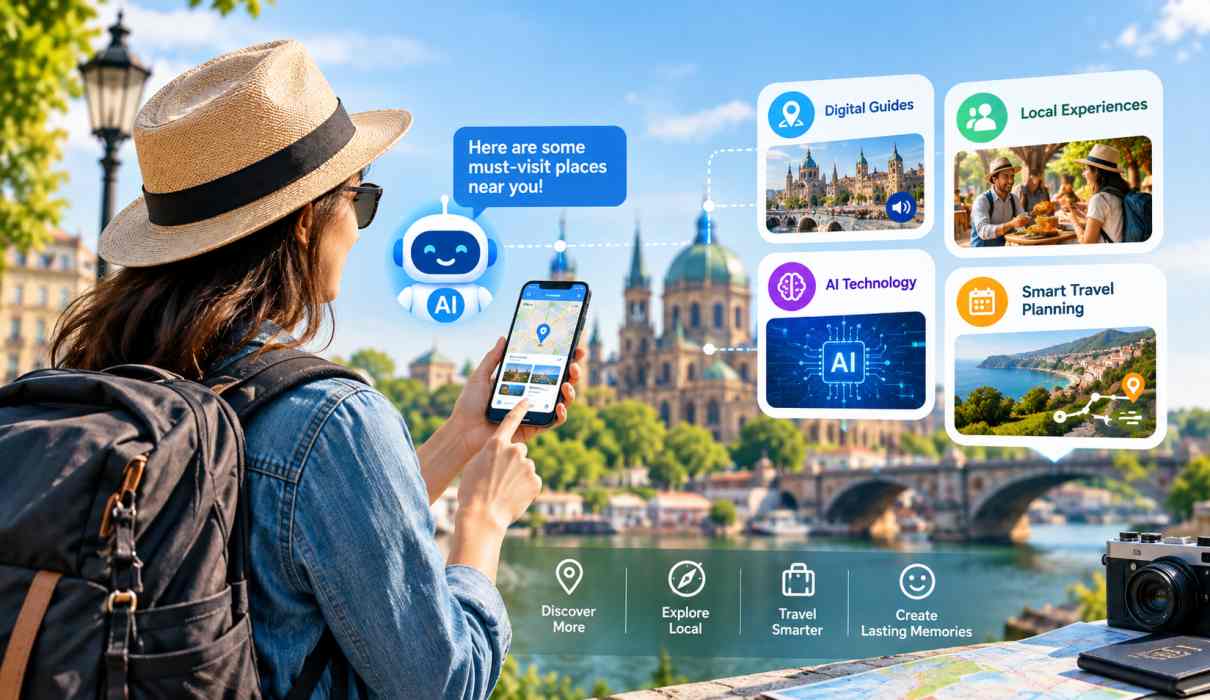
The Future of Tourist Information: AI Technology, Digital Guides, Local Experiences and Smart Travel Planning
Tourist information has always played an important role in helping travelers discover destinations, understand local attractions and plan memorable journeys. Traditionally, visitors depended on printed brochures, physical tourist information centres, guidebooks, maps and recommendations from local staff. Today, however, the way people search for and consume travel information is changing rapidly.
The growth of artificial intelligence, smartphones, digital maps, travel applications and online platforms is creating a new generation of tourist information services. Travelers can now discover destinations, compare attractions, create itineraries, find local experiences and navigate unfamiliar locations from a single connected device.
The future of tourist information is increasingly focused on convenience, personalization and real-time assistance. AI technology can provide instant answers, digital guides can deliver information wherever travelers are located, and smart travel planning tools can adapt itineraries according to individual interests and changing circumstances.
At the same time, travelers are looking beyond traditional tourist attractions. Local experiences, authentic cultural activities, independent businesses and lesser-known destinations are becoming important parts of modern travel.
This article explores how AI technology, digital tourist guides, local experiences and smart travel planning are transforming the future of tourist information.
1. AI Technology Is Transforming Tourist Information
Artificial intelligence is becoming one of the most important technologies in the modern tourism industry. AI-powered systems can analyze large amounts of information and provide travelers with useful recommendations in a conversational format.
Instead of searching through numerous websites, travelers can ask an AI travel assistant questions about destinations, attractions, transportation, restaurants, activities and travel schedules.
For example, a visitor planning a weekend trip could request a two-day itinerary based on a specific budget and interests. An AI-powered system could organize attractions into a logical route while considering available time and preferred activities.
AI can also provide assistance during a journey. Travelers may use digital assistants to find nearby attractions, understand transportation options or discover activities that match their interests.
This shift from traditional search to conversational travel assistance is likely to become an important part of future tourist information services.
2. Digital Tourist Guides Are Replacing Static Information
Traditional guidebooks and printed brochures remain useful, but digital guides offer greater flexibility. A digital tourist guide can be updated quickly and can provide much more information than a printed publication.
Travel apps and destination websites can combine maps, attraction descriptions, photographs, reviews, event information, transportation details and recommendations in one place.
Digital guides can also provide information based on a visitor’s current location. Someone exploring a historic district could use a smartphone to discover nearby landmarks and learn about their history.
Another advantage is multilingual support. Digital tourist information can be presented in multiple languages, helping international visitors navigate destinations more comfortably.
As smartphones remain central to modern travel, digital guides are likely to become an increasingly important part of destination information.
3. Personalized Travel Planning
Every traveler has different expectations. Some people enjoy history and culture, while others prefer nature, food, shopping, entertainment or adventure.
Future tourist information platforms are increasingly likely to personalize recommendations around these individual preferences.
Travelers may be able to provide information such as:
- Travel budget
- Trip duration
- Preferred activities
- Family or group size
- Mobility requirements
- Food preferences
- Transportation preferences
- Preferred travel pace
The system can then organize recommendations around those requirements.
A traveler interested in architecture might receive a walking route covering historic buildings, while a family could receive child-friendly attractions and activities.
Personalization can also reduce the amount of time travelers spend researching. Instead of manually reviewing hundreds of options, visitors can receive a smaller selection of relevant recommendations.
4. Smart Maps and Location-Based Information
Maps are essential tourist information tools, but modern digital maps are becoming much more sophisticated than traditional paper maps.
Smart travel maps can combine navigation with information about attractions, restaurants, museums, hotels, public transportation, events and local services.
Location-based technology can also provide useful recommendations as travelers move through a destination.
For example, a visitor walking through a city could see nearby attractions, cultural sites and restaurants on a digital map. Routes can be adjusted based on walking distance, transportation availability or visitor preferences.
Real-time information can make smart maps even more valuable. Updates about traffic, public transportation delays, temporary closures or crowded locations can help travelers make better decisions.
This combination of navigation and destination information is helping create a more connected travel experience.
5. The Rise of Digital Visitor Centres
Physical tourist information centres are evolving rather than disappearing completely. Many destinations are combining traditional visitor services with digital technologies.
Modern digital visitor centres can include interactive screens, touchscreen maps, QR codes, mobile applications and AI-powered information assistants.
Visitors may scan a QR code at a railway station or attraction and instantly access destination information on their smartphone.
Interactive kiosks can also provide information outside traditional office hours. This can be particularly useful for travelers arriving late at night or leaving early in the morning.
Digital visitor centres can also reduce language barriers by offering information in multiple languages.
The future may therefore involve a combination of human assistance and digital services, giving visitors more options for finding information.
6. Real-Time Tourist Information
Travel plans can change quickly. Weather conditions, transportation disruptions, temporary closures, special events and unexpected circumstances can affect a planned itinerary.
Real-time tourist information can help visitors respond to these changes.
Instead of relying on information collected before departure, travelers can receive updated information throughout their journey.
For example, if a tourist attraction closes temporarily, a digital travel platform could suggest another nearby attraction. If public transportation is disrupted, travelers could receive alternative route suggestions.
Real-time information makes tourist services more responsive and can reduce uncertainty during travel.
7. Local Experiences Are Becoming More Important
Modern travelers are increasingly interested in experiences that help them understand the culture and character of a destination.
Rather than visiting only famous landmarks, visitors may want to explore local markets, attend cultural events, discover traditional food, join workshops or visit independent businesses.
Digital tourist information can make these experiences easier to discover.
Local tourism providers can use digital platforms to promote activities directly to travelers. Visitors can discover experiences based on location, interests and availability.
This can also help distribute tourism spending beyond major attractions and large tourism companies.
A well-designed tourist information platform can therefore connect visitors with local communities while helping smaller businesses gain greater visibility.
8. AI-Powered Itinerary Creation
Creating an itinerary can be one of the most time-consuming parts of travel planning. Travelers need to decide which attractions to visit, how long to stay at each location and how to travel between them.
AI technology can simplify this process.
A traveler could provide a destination, number of days, budget and interests, and an AI travel planner could create a suggested itinerary.
The system could organize attractions according to geographical location and available time. It may also suggest breaks, restaurants and alternative activities.
AI-generated itineraries can be adjusted easily. If a traveler decides to spend more time at a particular attraction, the rest of the itinerary can be reorganized.
This flexibility represents an important development in smart travel planning.
9. Voice Assistants and Conversational Travel Services
Travelers often need information while walking, driving or carrying luggage. Voice technology can make accessing tourist information more convenient.
Instead of typing a question into a search engine, visitors can ask a voice assistant for directions, nearby attractions or local recommendations.
Conversational travel systems can also allow follow-up questions.
For example, a traveler might ask for a nearby museum and then ask about its opening hours, admission information and distance from their current location.
This creates a more natural way of interacting with tourist information.
As conversational AI improves, voice-based travel assistance could become increasingly integrated into smartphones, vehicles and other connected devices.
10. Augmented Reality and Interactive Tourism
Augmented reality has the potential to change how visitors experience tourist information.
Through a smartphone or compatible device, travelers can access digital information while looking at a physical landmark.
Historical buildings could be accompanied by digital descriptions, maps or historical reconstructions. Museums could provide interactive information about exhibits.
AR navigation could also provide directions directly within a visitor’s surroundings.
These technologies can make tourist information more visual and engaging, particularly for younger travelers and technology-oriented audiences.
11. Sustainable Travel Information
Tourism technology is also becoming increasingly connected to sustainability.
Travelers can use digital platforms to find public transportation, walking routes, cycling paths, eco-friendly accommodation and responsible tourism activities.
Tourist information services can also educate visitors about local environmental rules and responsible behavior.
For example, visitors to protected natural areas may receive information about designated walking routes, wildlife protection and waste management.
Smart tourist information can also help manage visitor distribution. By highlighting alternative attractions, destinations can encourage travelers to explore less crowded areas.
This can contribute to more balanced tourism development.
12. Accessible Tourist Information
Accessibility is another important area where digital tourist information can make a difference.
Travelers with mobility or other accessibility requirements often need detailed information before visiting a destination.
Digital tourism platforms can provide information about accessible entrances, elevators, transportation, restrooms, seating and walking conditions.
Clear and accurate information allows travelers to make informed decisions before arriving.
Digital accessibility also matters. Tourist websites and applications should be designed with readable text, logical navigation and compatibility with assistive technologies.
Inclusive tourist information can make destinations easier to explore for a broader range of visitors.
13. Virtual Tours and Pre-Travel Experiences
Virtual tours are becoming useful tools for destination marketing and tourist information.
Travelers can explore museums, hotels, attractions and destinations online before making travel decisions.
A virtual tour can help visitors understand the layout and character of a location. This can be particularly useful when choosing attractions or planning a detailed itinerary.
Virtual experiences can also provide access to locations that may be difficult to visit physically.
For tourism organizations, these technologies provide another way to communicate the character of a destination before visitors arrive.
14. Multilingual and Cross-Cultural Travel Support
International tourism involves travelers from many linguistic and cultural backgrounds.
Digital tourist information can make travel easier by offering multilingual content and translation assistance.
Travelers can use digital tools to understand signs, menus, instructions and local information.
AI-assisted translation can further reduce communication barriers. However, accuracy and cultural context remain important, particularly for safety information and official instructions.
Future tourist information platforms are likely to place greater emphasis on clear, accessible and culturally appropriate communication.
15. Data-Driven Tourism and Smarter Destinations
Tourism organizations can also benefit from the information generated through digital platforms.
Aggregated and responsibly managed data can help destinations understand visitor interests, popular attractions and travel patterns.
This information can support decisions about transportation, visitor facilities, public spaces and tourism services.
For example, if a destination identifies heavy visitor demand in one area, it may promote alternative attractions to distribute tourism more evenly.
Data-driven tourism can therefore improve not only individual travel experiences but also destination management.
Privacy and responsible data practices will remain important as digital tourism services become more sophisticated.
16. Human Expertise Will Still Matter
Technology will transform tourist information, but human knowledge will remain valuable.
Local tourism professionals can provide cultural context, personal recommendations and assistance during unexpected situations.
Travelers may also prefer speaking with a person when they have complex questions or need help during an emergency.
The future of tourist information is therefore unlikely to be entirely digital. Instead, technology can complement human expertise.
A digital platform can provide instant information while local staff provide personal assistance and deeper destination knowledge.
This combination can create a stronger and more flexible visitor experience.
The Future of Tourist Information
The future of tourist information is moving toward a more intelligent, personalized and connected model.
AI technology can simplify research and itinerary creation. Digital guides can provide information anywhere. Smart maps can combine navigation with real-time destination information. Local experience platforms can connect travelers with communities and independent businesses.
At the same time, digital visitor centres, voice assistants, augmented reality, virtual tours and multilingual services are expanding the ways visitors interact with destinations.
For tourism businesses and destination organizations, adopting these technologies can create new opportunities to communicate with travelers before, during and after their journeys.
For travelers, the biggest change may be the shift from searching for information to receiving information that is increasingly tailored to their individual needs.
Conclusion
The future of tourist information is being shaped by AI technology, digital guides, smart maps, local experiences and personalized travel planning. These developments are making it easier for travelers to research destinations, create itineraries, navigate unfamiliar locations and discover experiences that match their interests.
However, successful digital tourism will depend on more than technology. Information must be accurate, accessible, timely and useful. Local knowledge and human support will continue to provide value alongside AI and automated systems.
As tourism becomes increasingly connected, tourist information is evolving from static brochures and basic maps into an interactive digital service that can support the entire visitor journey.
From the first destination search to the final local experience, smart tourist information is becoming an essential part of modern travel—and its role is likely to grow even further in the years ahead.