
 By
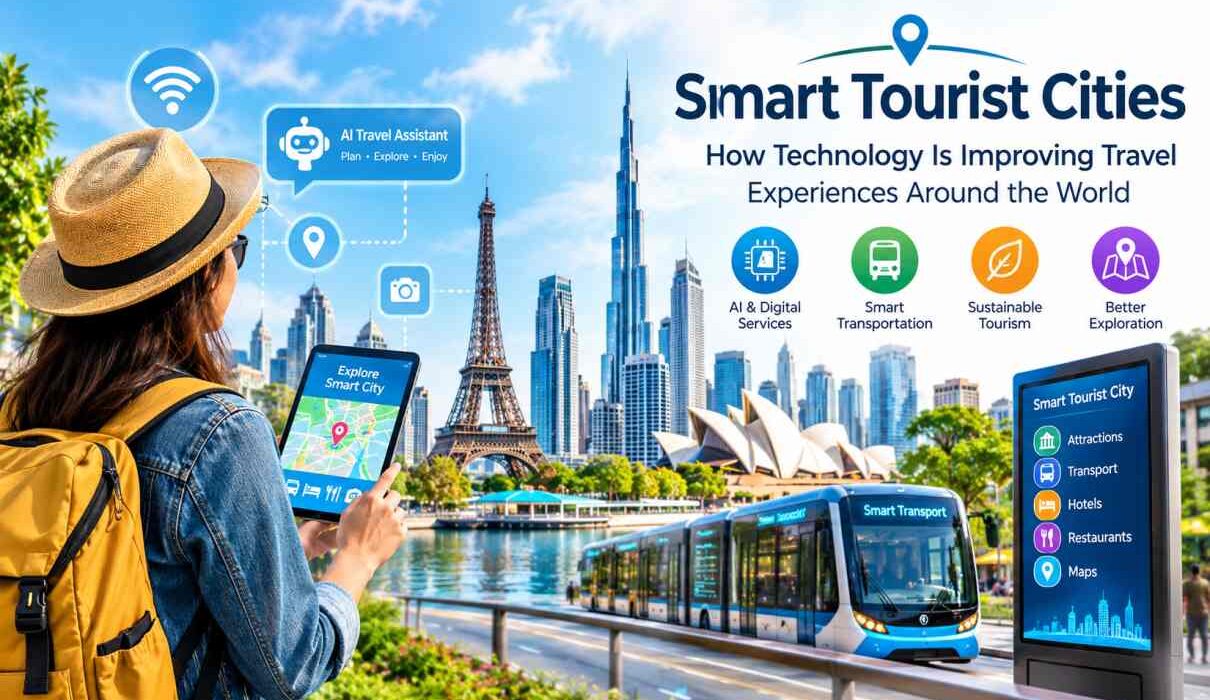
Smart Tourist Cities: How Technology Is Improving Travel Experiences Around the World
Introduction
The global tourism industry is undergoing a significant digital transformation. Travelers increasingly expect convenient transportation, reliable information, personalized recommendations, and seamless access to attractions. To meet these expectations, many destinations are adopting innovative technologies that improve tourism services and urban infrastructure.
This transformation has encouraged the development of smart tourist cities, where artificial intelligence, connected infrastructure, digital platforms, and sustainable technologies work together to create better travel experiences.
From contactless payments and intelligent transportation systems to interactive maps and virtual tourism experiences, technology is changing how people explore destinations worldwide.
Smart tourism is not simply about introducing advanced technology. It also involves improving accessibility, protecting local environments, supporting businesses, and helping visitors navigate unfamiliar places.
Cities such as Singapore, Barcelona, Amsterdam, Dubai, and Seoul demonstrate different approaches to technology-supported tourism.
As digital innovation continues, smart tourist cities are becoming increasingly relevant to the future of international travel.
This article explores the technologies behind smart tourism, their advantages, leading examples, challenges, and emerging opportunities for travelers and tourism businesses.
What Are Smart Tourist Cities?
Smart tourist cities are destinations that use digital technologies, connected infrastructure, and data-driven services to improve experiences for visitors and residents.
These cities combine tourism management with broader smart-city initiatives, including public transportation, environmental monitoring, digital communication, and urban planning.
The objective is to make travel more convenient, accessible, efficient, and sustainable.
A smart tourist city may provide real-time transportation updates, digital attraction tickets, multilingual information services, and personalized destination recommendations.
Some destinations also use visitor-management technologies to understand tourism patterns and reduce overcrowding.
Key Features of Smart Tourist Cities
Common characteristics include:
- Smart public transportation and digital ticketing
- AI-powered tourism information services
- Interactive maps and navigation applications
- Contactless payment facilities
- Digital hotel and attraction bookings
- Intelligent crowd-management systems
- Sustainable energy and environmental monitoring
- Accessible tourism information platforms
Not every city offers all these features. Smart tourism development varies according to infrastructure, investment, public policy, and local priorities.
Why Smart Tourism Technology Is Becoming Important
Modern travelers rely heavily on digital tools before and during their journeys.
Online booking platforms, navigation applications, digital payments, and instant translation services have become familiar parts of travel planning.
Smart tourism technology builds on these services by connecting information across transportation networks, attractions, accommodation providers, and public facilities.
Increasing Demand for Convenient Travel
Visitors often prefer destinations where they can easily understand transportation options, purchase tickets, and access reliable information.
Integrated digital services can reduce uncertainty and make travel planning easier.
Growth of Independent Tourism
Independent travelers frequently organize accommodation, transportation, and sightseeing without traditional travel agencies.
Digital tourism platforms provide information that supports flexible itineraries and independent decision-making.
Greater Focus on Sustainable Tourism
Popular destinations face challenges involving traffic congestion, waste management, and pressure on public spaces.
Smart systems can help authorities monitor conditions and make better infrastructure decisions.
Improved Tourism Accessibility
Digital accessibility features, multilingual information, and real-time navigation tools can help more people explore destinations comfortably.
These benefits explain why smart tourism is becoming an important part of modern destination planning.
How Artificial Intelligence Is Transforming Tourist Experiences
Artificial intelligence is among the technologies influencing the development of smart tourist cities.
AI-powered applications can analyze information, respond to visitor questions, and provide recommendations based on individual preferences.
AI-Powered Travel Assistants
Digital travel assistants can help tourists find attractions, compare transportation options, and organize daily itineraries.
For example, a visitor planning a short city break may use an AI assistant to identify museums, restaurants, and transportation connections.
However, travelers should verify important details, including opening hours, ticket prices, and travel requirements, through official sources.
Personalized Travel Recommendations
Some tourism platforms use recommendation systems to suggest activities based on interests, previous searches, or stated preferences.
A traveler interested in architecture may receive suggestions for historic buildings, design museums, and guided heritage tours.
Personalization can make destination discovery more relevant.
Multilingual Communication
AI-powered translation tools can help visitors understand signs, menus, and basic conversations.
Although automated translations are not always accurate, they can reduce everyday communication barriers.
Intelligent Visitor Management
Tourism authorities may use predictive analytics to estimate visitor demand and identify busy periods.
Such information can support staffing decisions, transportation planning, and crowd-management strategies.
Smart Transportation: Making City Travel Easier
Transportation is a major component of the smart tourism experience.
Visitors need reliable ways to travel between airports, hotels, attractions, and public transportation hubs.
Smart transportation systems improve access to travel information and simplify movement throughout a city.
Real-Time Public Transportation Information
Digital displays and mobile applications can provide updates about train arrivals, bus routes, service disruptions, and alternative connections.
This information helps visitors make informed travel decisions.
Contactless Ticketing and Payments
Contactless payment technology allows travelers to access certain transportation services using compatible cards or mobile devices.
Depending on the destination, tourists may also use digital travel passes or integrated ticketing applications.
Intelligent Traffic Management
Some cities use connected traffic signals, monitoring systems, and data analysis to improve traffic flow.
These technologies can help reduce congestion, although their effectiveness depends on road conditions and implementation.
Smart Parking Solutions
Digital parking platforms may display available spaces and provide electronic payment options.
Such services can be useful for tourists traveling by rental car.
Together, these developments contribute to more convenient urban mobility.
Digital Tourism Platforms and Smart Travel Applications
Smart travel applications connect tourists with destination information and essential services.
Instead of relying entirely on printed guides, travelers can access digital maps, attraction details, public transportation information, and booking facilities.
Interactive Tourist Maps
Interactive maps help visitors locate landmarks, restaurants, hotels, and transportation stations.
Some applications also provide walking directions, accessibility information, and estimated travel times.
Digital Attraction Tickets
Electronic ticketing can simplify entry to museums, monuments, and entertainment venues.
Advance reservations may also help attractions manage visitor numbers.
Integrated Tourism Information
Official destination platforms can provide verified information about local attractions, events, visitor facilities, and transportation.
Travelers benefit when information is accurate, regularly updated, and available in multiple languages.
Emergency and Safety Information
Some city applications provide emergency contacts, weather alerts, and public safety announcements.
These services can help visitors respond to unexpected situations.
Top Smart Tourist Cities Around the World
Several international destinations illustrate how technology can improve urban tourism.
Each city has developed its own approach based on local infrastructure and visitor needs.
1. Singapore: A Digitally Connected Travel Destination
Singapore is widely recognized for its digital infrastructure and smart-city initiatives.
Visitors benefit from extensive public transportation, electronic payment options, and digital information services.
The city-state also uses technology across urban planning and public administration.
For tourists, these developments can simplify navigation, transportation, and access to essential services.
2. Barcelona, Spain: Smart Urban Tourism
Barcelona has implemented various smart-city initiatives involving urban infrastructure, environmental management, and digital public services.
The city also faces challenges related to tourism pressure and visitor concentration.
Technology-supported planning can contribute to more effective management of public spaces and tourism activity.
Barcelona demonstrates how smart tourism must balance visitor convenience with residents’ quality of life.
3. Dubai, United Arab Emirates: Digital Tourism Innovation
Dubai has invested in digital government services, smart infrastructure, and technology-supported transportation.
Visitors can access numerous online services for planning activities and navigating the city.
Digital payments, electronic reservations, and modern transportation infrastructure contribute to its tourism experience.
4. Seoul, South Korea: Technology-Integrated Tourism
Seoul combines advanced digital connectivity with extensive public transportation.
Travelers can use navigation applications, digital tourism information, and electronic payment services.
The city also offers opportunities to explore cultural heritage alongside modern technological infrastructure.
5. Amsterdam, Netherlands: Sustainable Smart-City Development
Amsterdam has pursued smart-city initiatives related to mobility, energy, and urban sustainability.
Digital information services support visitors exploring its museums, neighborhoods, and cultural attractions.
The city also illustrates the importance of managing tourism responsibly in densely visited urban areas.
Smart Hotels and Digital Accommodation Services
Accommodation providers are increasingly adopting digital tools to improve guest convenience.
Many hotels now offer online check-in, electronic reservations, and mobile communication services.
Some properties provide digital room access or automated assistance.
Contactless Check-In
Digital check-in systems can reduce waiting times and simplify arrival procedures.
Guests may complete certain registration steps before reaching their accommodation.
Smart Room Technology
Selected hotels offer connected lighting, temperature controls, and entertainment systems.
These features allow guests to adjust room conditions according to their preferences.
Digital Concierge Services
Virtual concierge platforms can provide information about hotel facilities, transportation, and nearby attractions.
However, human assistance remains important, particularly when guests require specialized support.
Augmented Reality and Virtual Reality in Tourism
Immersive technologies are creating new ways to experience destinations.
Augmented reality (AR) adds digital information to views of the physical environment.
For example, an AR application may display historical facts when visitors point their smartphones toward a landmark.
Virtual reality (VR) creates simulated environments that allow users to explore digital representations of places.
Museums and tourism organizations may use VR to introduce cultural sites or provide educational experiences.
These technologies can improve storytelling and help visitors understand local history.
However, immersive tourism applications require suitable devices, reliable content, and accessible design.
They are best viewed as complementary experiences rather than complete replacements for physical travel.
Sustainable Tourism and Smart Environmental Management
Sustainability is an essential consideration in smart tourist city development.
Popular destinations must balance economic benefits with environmental protection and community well-being.
Digital technologies can support this balance through better monitoring and planning.
Smart Energy Management
Connected building systems can monitor electricity consumption and help improve energy efficiency.
Hotels, transportation facilities, and public buildings may benefit from these technologies.
Intelligent Waste Management
Sensor-supported waste collection systems can help authorities identify when containers require servicing.
This may improve collection planning in busy tourist areas.
Environmental Monitoring
Air-quality sensors and other monitoring equipment can provide information about environmental conditions.
Such data may support public communication and long-term urban planning.
Responsible Visitor Distribution
Digital tourism information can encourage visitors to explore less crowded attractions.
When managed carefully, this approach may help reduce pressure on heavily visited locations.
How Smart Tourism Benefits Local Businesses
Smart tourist cities can create opportunities for hotels, restaurants, tour operators, and other local businesses.
Digital discovery platforms help visitors identify nearby services.
Online booking systems make reservations more convenient, while digital payment options simplify transactions.
Businesses may also use customer feedback and demand information to improve their services.
Smaller tourism operators can benefit from online visibility, provided they have access to suitable digital tools and training.
However, tourism platforms should avoid excluding businesses that lack advanced technology or substantial marketing budgets.
Inclusive digital development is important for ensuring that tourism benefits reach local communities.
Challenges Facing Smart Tourist Cities
Although smart tourism offers significant opportunities, implementation also creates challenges.
Data Privacy and Cybersecurity
Tourism platforms may process location information, payment details, and personal preferences.
Cities and businesses must protect this information through appropriate security measures and transparent data practices.
Digital Accessibility
Not every traveler has access to smartphones, reliable internet connections, or digital payment methods.
Tourism services should continue offering practical alternatives.
Infrastructure Costs
Advanced transportation systems, connected sensors, and digital platforms require investment and maintenance.
Smaller destinations may face financial and technical limitations.
Technology Dependence
Service interruptions, inaccurate information, or software failures can disrupt travel experiences.
Reliable support systems and clear offline alternatives remain essential.
Successful smart tourism requires thoughtful planning rather than technology adoption alone.
The Future of Smart Tourist Cities in 2027 and Beyond
Smart tourist cities are likely to continue evolving as digital infrastructure and tourism services become more connected.
Artificial intelligence may support increasingly personalized travel planning.
Improved transportation information could make journeys across different mobility networks easier to organize.
Augmented reality may provide richer educational experiences at cultural attractions.
Environmental monitoring and visitor-management systems could also become more important as destinations respond to climate pressures and overcrowding.
However, future success will depend on more than technological sophistication.
Cities must consider affordability, accessibility, privacy, environmental impact, and residents’ needs.
The most successful smart tourism strategies will combine useful digital services with welcoming public spaces and authentic cultural experiences.
Frequently Asked Questions About Smart Tourist Cities
1. What is a smart tourist city?
A smart tourist city uses digital technologies, connected infrastructure, and information services to improve travel convenience, accessibility, and destination management.
2. How does technology improve tourism experiences?
Technology helps travelers access maps, transportation updates, digital tickets, translation services, and destination information more conveniently.
3. Which cities are examples of smart tourism destinations?
Singapore, Barcelona, Dubai, Seoul, and Amsterdam are examples of destinations with significant smart-city or digital tourism initiatives.
4. Is smart tourism environmentally friendly?
Smart tourism can support sustainability through efficient transportation, environmental monitoring, and better resource management. However, its environmental impact depends on implementation.
5. What is the future of smart tourism?
Future developments may include more advanced AI assistants, integrated transportation platforms, immersive cultural experiences, and improved visitor-management systems.
Conclusion
Smart tourist cities are transforming travel experiences around the world by connecting digital innovation with transportation, accommodation, cultural attractions, and urban services.
Technologies such as artificial intelligence, interactive maps, contactless payments, and intelligent infrastructure can make destinations easier to explore.
At the same time, smart tourism creates opportunities for more efficient resource management and improved accessibility.
Cities including Singapore, Barcelona, Dubai, Seoul, and Amsterdam demonstrate how different approaches to digital development can support tourism.
Nevertheless, technology must remain a tool for improving experiences rather than an objective in itself.
By combining innovation, sustainability, accessibility, and responsible planning, smart tourist cities can help create more convenient, inclusive, and enjoyable travel experiences for future generations.