
 By
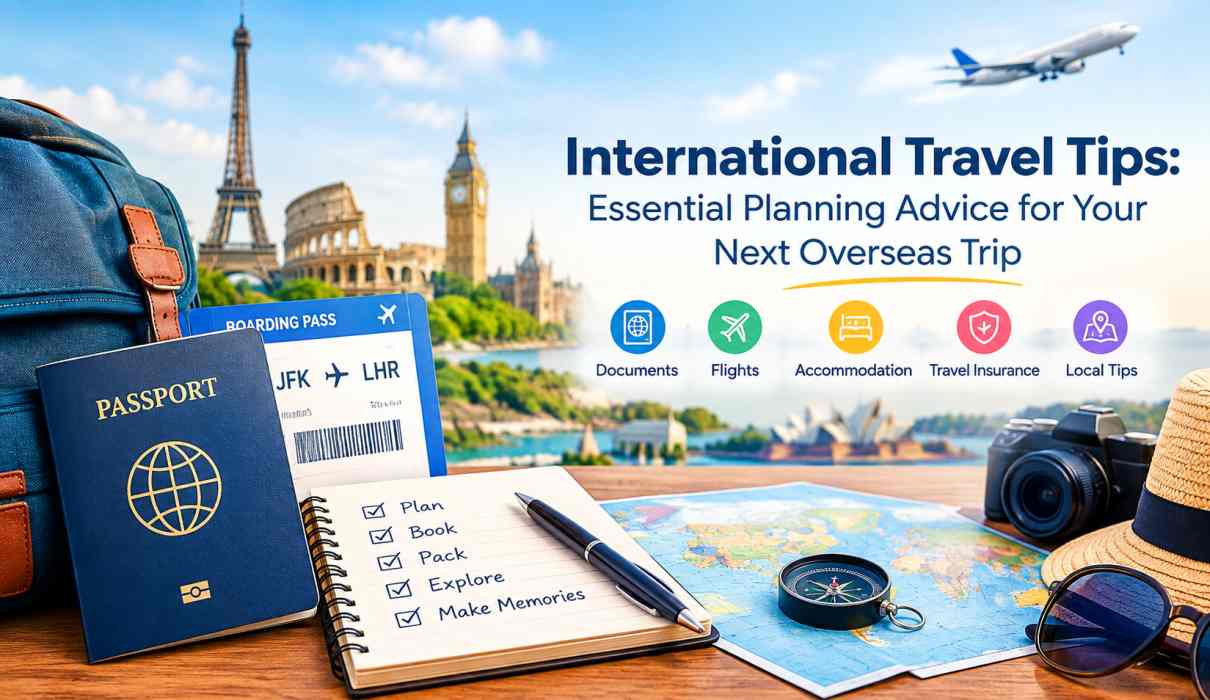
International Travel Tips: Essential Planning Advice for Your Next Overseas Trip
International travel can be one of the most rewarding experiences in life. Exploring a new country allows you to discover different cultures, taste new cuisines, meet people from different backgrounds, and create unforgettable memories. However, traveling overseas also requires more preparation than a domestic trip.
From checking passport validity and visa requirements to planning flights, accommodation, travel insurance, money, transportation, and communication, several details can affect your journey. Good preparation can reduce stress and help you enjoy your destination with greater confidence.
Whether you are planning your first international vacation or are an experienced traveler, these international travel tips will help you prepare for a smoother, safer, and more organized overseas trip.
1. Research Your Destination Before You Travel
One of the most important international travel tips is to research your destination before booking your trip. Learn about the country’s climate, local customs, popular attractions, transportation system, currency, language, and general travel conditions.
Research can help you understand what to expect when you arrive. For example, some destinations may have specific cultural expectations regarding clothing, photography, public behavior, or religious sites.
Also check the best time to visit. Weather can have a major effect on sightseeing, outdoor activities, transportation, and accommodation prices.
Create a basic destination checklist covering:
- Weather and seasonal conditions
- Local customs and etiquette
- Currency and payment methods
- Major attractions
- Public transportation
- Local emergency numbers
- Common languages
- Entry requirements
- Local laws and regulations
A few hours of research before your trip can prevent many avoidable problems later.
2. Check Your Passport and Visa Requirements
Your passport is one of the most important documents for international travel. Check its expiration date well before your departure.
Many countries require travelers to have a passport that remains valid for a certain period beyond the planned date of entry or departure. Some destinations may also require blank passport pages.
Visa requirements vary depending on your nationality and destination. Depending on the country, you may need:
- A tourist visa
- An electronic visa
- An electronic travel authorization
- Visa-free entry
- A visa on arrival
- Proof of onward or return travel
Always verify requirements through the destination country’s official immigration or embassy website before traveling.
Do not rely solely on old travel blogs or social media posts because immigration rules can change.
If you need a visa, apply early enough to allow for processing delays. Keep digital and printed copies of your visa approval or travel authorization when appropriate.
3. Plan Your Flights Carefully
Choosing the right flight can make your international journey more comfortable.
When comparing flights, don’t look only at the ticket price. Consider baggage allowances, layover duration, airport changes, cancellation policies, arrival time, and total travel time.
A very cheap flight may involve a long layover or inconvenient airport connection. A slightly more expensive option may save considerable time and reduce travel fatigue.
Before booking, check:
- Departure and arrival times
- Number of stops
- Layover duration
- Baggage allowance
- Airport locations
- Change and cancellation policies
- Connection requirements
For connecting flights, allow enough time between flights, especially when you need to pass immigration, collect baggage, or change terminals.
4. Choose Accommodation Based on Location
Accommodation is more than just a place to sleep. Its location can influence your entire travel experience.
A hotel or vacation rental close to major attractions or public transportation can reduce commuting time and transportation costs.
When selecting accommodation, compare:
- Location
- Guest reviews
- Safety information
- Check-in and check-out times
- Cancellation policy
- Included facilities
- Breakfast options
- Wi-Fi availability
- Transportation access
Read recent reviews rather than relying only on the property’s promotional description.
If you arrive late at night, confirm that the accommodation accepts late check-ins. This small step can prevent unnecessary stress after a long international flight.
5. Buy Suitable Travel Insurance
Travel insurance is an important part of international trip planning. Unexpected situations such as medical emergencies, trip interruptions, baggage problems, or travel delays can create significant expenses.
Before purchasing a policy, understand what it actually covers.
Depending on the plan, travel insurance may provide coverage for:
- Emergency medical treatment
- Hospitalization
- Trip cancellation
- Trip interruption
- Lost or delayed baggage
- Travel delays
- Emergency assistance
Coverage varies significantly between policies, so read the terms, exclusions, limits, and claim requirements carefully.
If you have planned activities such as adventure sports, check whether those activities are covered.
Carry your policy details and emergency assistance contact information in an accessible location.
6. Prepare a Realistic Travel Budget
Creating a travel budget is one of the most useful travel tips for international trips.
Your budget should include more than flights and hotels. Consider the complete cost of the trip.
A basic international travel budget can include:
- Flights
- Accommodation
- Visa fees
- Travel insurance
- Local transportation
- Food and drinks
- Attractions and activities
- Shopping
- Internet or SIM costs
- Airport transfers
- Emergency expenses
Keep a separate emergency fund that you do not plan to spend.
Research typical prices at your destination before traveling. This will help you estimate daily expenses and avoid unrealistic budgets.
It is also useful to track spending during the trip using a notes app, spreadsheet, or budgeting application.
7. Understand Currency and Payment Options
Before leaving your home country, learn about the destination’s currency and common payment methods.
International travelers should ideally have more than one way to access money. For example, you may use a debit or credit card while also keeping some local cash for small purchases.
Check with your bank or card provider about international transactions, foreign exchange fees, withdrawal charges, and card usage abroad.
Notify your bank about overseas travel if required by your provider.
Avoid carrying all your money in one place. Keep payment cards and cash distributed safely so that losing one wallet does not leave you without access to funds.
8. Pack Smart, Not Excessively
Packing efficiently can make international travel much easier.
Start with the weather and planned activities. Pack clothing that can be combined in different ways instead of bringing too many individual outfits.
Essential items may include:
- Passport and travel documents
- Appropriate clothing
- Comfortable shoes
- Toiletries
- Prescription medicines
- Phone and charger
- Power adapter
- Basic first-aid supplies
- Travel insurance information
- Payment cards
- Some local currency
Check airline baggage restrictions before packing.
Keep important documents, medication, valuables, and essential electronics in your carry-on rather than checked baggage.
A lightweight bag can also make airport transfers, train journeys, and city exploration much more convenient.
9. Keep Important Documents Accessible
Create both physical and digital copies of important travel documents.
Depending on your trip, these may include:
- Passport
- Visa or travel authorization
- Flight tickets
- Hotel reservations
- Travel insurance
- Driving license
- Emergency contacts
- Important medical information
Store digital copies securely in your phone and cloud storage where appropriate.
However, don’t depend entirely on internet access. A printed copy of essential information can be useful if your phone battery dies or you lose connectivity.
Keep your original passport secure and accessible whenever required for identification or border procedures.
10. Prepare Your Phone and Internet Access
Staying connected is extremely useful when traveling internationally. You may need your phone for maps, translation, transportation, reservations, communication, and emergency information.
Before departure, check whether your mobile provider offers international roaming.
Other options may include:
- Local SIM cards
- International SIM cards
- eSIM services
- Travel data packages
- Wi-Fi networks
Download important maps and travel information for offline use when possible.
Also download translation tools and save essential addresses, such as your hotel and airport, before leaving.
A portable power bank can be helpful during long travel days, provided it complies with airline rules.
11. Learn Basic Local Etiquette
Respecting local culture is an important part of responsible international travel.
Before visiting another country, learn basic customs regarding greetings, clothing, dining, tipping, photography, religious places, and public behavior.
A few simple phrases in the local language can also make interactions easier. Learning words such as “hello,” “please,” “thank you,” and “excuse me” demonstrates respect and can make everyday communication more pleasant.
Remember that practices that are normal at home may not be appropriate elsewhere.
Being observant and respectful is often the easiest way to adapt to a new environment.
12. Plan Transportation Before Arrival
Airport transportation is one area where advance planning can save time.
Research how you will travel from the airport to your accommodation before departure. Depending on your destination, options may include:
- Airport trains
- Public buses
- Taxis
- Ride-hailing services
- Hotel transfers
- Rental cars
Understand approximate travel times and costs.
If you plan to rent a car, check whether your driving license is accepted and whether an international driving permit is required.
For public transportation, learn about local ticketing systems and payment methods in advance.
13. Be Careful With Food and Water
Trying local food is one of the highlights of international travel, but travelers should still take sensible precautions.
Eat at establishments that appear clean and well maintained. If you are unsure about local water quality, use sealed bottled water or follow reliable local guidance.
Travelers with food allergies should learn the relevant words in the local language and communicate dietary restrictions clearly.
If you take prescription medication, carry enough for your trip and keep it in its original packaging when practical. Check destination-specific rules if your medication is regulated.
14. Stay Aware of Personal Safety
Good travel safety habits are simple but important.
Keep valuables secure, especially in crowded tourist areas. Be cautious when strangers ask for money or personal information, and use official transportation services where appropriate.
Avoid displaying large amounts of cash or expensive electronics unnecessarily.
Share your itinerary with someone you trust if appropriate. Save emergency contact numbers and know where the nearest embassy or consular assistance is located.
Most importantly, pay attention to your surroundings and follow local laws.
15. Don’t Overpack Your Itinerary
One common international travel mistake is trying to visit too many places in too little time.
Instead of scheduling every hour, leave some free time.
A relaxed itinerary allows you to:
- Explore neighborhoods
- Try local restaurants
- Rest after long journeys
- Discover unexpected attractions
- Adjust plans when weather changes
- Enjoy the destination rather than constantly rushing
Prioritize the experiences that matter most to you and keep the rest flexible.
16. Prepare for Jet Lag and Long Flights
Long-distance travel can affect your sleep schedule and energy levels.
Stay hydrated during flights, move around periodically when appropriate, and try to adjust your sleep schedule gradually around your destination’s time zone.
After arrival, getting natural daylight and following the local schedule can help you adapt.
Don’t plan an exhausting sightseeing schedule immediately after a long overnight flight if you can avoid it.
Give yourself time to recover and settle in.
17. Check Travel Updates Before Departure
Travel conditions can change quickly.
Before leaving, check your airline’s latest flight information, destination entry requirements, weather conditions, transportation updates, and any official travel advisories relevant to your trip.
Save important contact information offline.
It is also worth checking your accommodation reservation and airport transfer details shortly before departure.
This final review can catch small problems before they become major travel disruptions.
18. Create a Simple Pre-Travel Checklist
A checklist can help you avoid forgetting important tasks.
One to two months before travel:
- Check passport validity
- Research visa requirements
- Book flights
- Reserve accommodation
- Purchase travel insurance
- Plan major activities
One to two weeks before travel:
- Confirm reservations
- Arrange transportation
- Check currency and payment options
- Prepare documents
- Plan phone connectivity
- Check weather
One or two days before departure:
- Complete online check-in if available
- Pack essentials
- Charge devices
- Download maps and travel documents
- Check flight status
- Confirm airport transportation
This simple system can make departure day much less stressful.
Conclusion
International travel becomes easier when you prepare carefully without overcomplicating the process. From checking passport and visa requirements to choosing accommodation, managing money, arranging transportation, packing smartly, and understanding local customs, every small preparation can contribute to a smoother journey.
The best international travel tips are not about creating a rigid schedule. They are about preparing for the important details while leaving enough flexibility to enjoy the experience.
Before your next overseas trip, research your destination, organize essential documents, create a realistic budget, prepare your phone and payment methods, and make a practical itinerary. With thoughtful planning and a flexible attitude, you can spend less time worrying about logistics and more time discovering what makes your destination special.