
 By
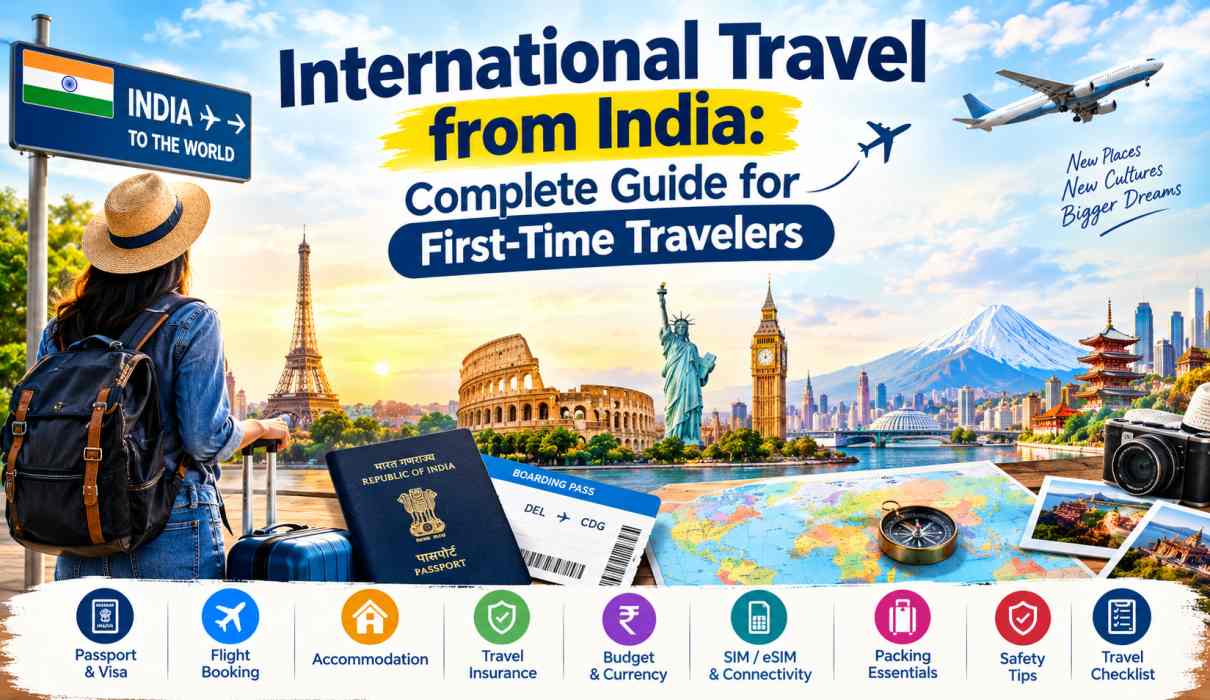
International Travel from India: Complete Guide for First-Time Travelers
Planning your first international trip from India can feel exciting and overwhelming at the same time. From getting your passport and applying for a visa to booking flights, arranging foreign currency, packing correctly, and completing immigration at the airport, there are several things to prepare before you leave the country.
The good news is that international travel becomes much easier when you understand the process and plan everything in advance.
This complete international travel guide from India explains the essential steps first-time travelers should know, including passport requirements, visas, flight booking, travel insurance, airport procedures, money management, accommodation, safety, and useful travel tips.
Whether you are planning a vacation to Southeast Asia, Europe, the Middle East, Australia, or another international destination, this guide can help you prepare with greater confidence.
1. Choose Your International Destination
The first step is deciding where you want to travel.
For a first international trip, consider factors such as:
- Travel budget
- Flight duration
- Visa requirements
- Weather
- Local transportation
- Accommodation costs
- Language
- Food preferences
- Safety and local laws
- Number of days available
Do not choose a destination only because it is popular on social media. Consider whether the destination matches your budget, schedule, and travel experience.
Also check the best season to visit. Some destinations have heavy rainfall, extreme temperatures, or peak-season crowds during certain months.
Creating a basic itinerary before booking anything can help you estimate the total cost of your trip.
2. Get a Valid Indian Passport
A passport is one of the most important documents required for international travel.
If you do not have a passport, you can apply through India’s official Passport Seva system. The Ministry of External Affairs provides online services for fresh passport applications and re-issue applications.
Before your trip, check:
- Your passport is valid for the required period
- Your name and date of birth are correct
- The passport is in good physical condition
- You have sufficient blank pages if required
- Your passport details match your flight and visa documents
Passport validity requirements can differ by destination. Some countries require a passport to remain valid for a specified period beyond your planned stay.
Therefore, never assume that having a valid passport automatically means you can enter another country.
3. Check Visa Requirements
One of the most important steps in planning international travel from India is checking the visa requirements for your destination.
Depending on the country, Indian citizens may need:
- A traditional visa
- An e-visa
- An electronic travel authorization
- Visa on arrival
- A transit visa
- No visa for a particular permitted stay
Requirements can depend on your nationality, destination, travel purpose, length of stay, passport type, and itinerary.
Visa rules can also change, so travelers should check the destination country’s official immigration or embassy website before making final plans.
The IATA Travel Centre is another useful source for checking personalized passport, visa, and health requirements based on nationality and itinerary. IATA notes that travel rules can change frequently and recommends checking requirements close to departure.
If a visa is required, apply well before your intended travel date. Avoid making non-refundable arrangements until you understand the visa conditions and processing timeline.
4. Prepare Your Travel Documents
After confirming your passport and visa requirements, create a travel-document folder.
Important documents may include:
- Passport
- Visa or electronic visa approval
- Flight tickets
- Hotel booking
- Travel insurance policy
- Return or onward ticket
- Travel itinerary
- Emergency contact information
- Copies of important identification documents
- Any required health or vaccination documentation
Keep both digital and physical copies of important documents.
Store digital copies securely on your phone and in a trusted cloud account. Carrying photocopies can also be useful if an original document is lost.
Remember that having the correct documents does not automatically guarantee entry into a foreign country. Final admission is determined by the relevant immigration authorities, and airlines may also have document requirements for boarding.
5. Book Your International Flight
Once your documentation is on track, you can start comparing international flights.
When choosing flights, look beyond the ticket price.
Check:
- Baggage allowance
- Number of stops
- Layover duration
- Airport changes
- Departure and arrival times
- Cancellation or change conditions
- Meals and other inclusions
- Transit visa requirements
A very cheap ticket may not always be the most convenient option if it includes a long layover, complicated airport transfer, or additional baggage charges.
For your first international trip, a straightforward itinerary can make the journey easier to manage.
If you have a connecting flight, check whether you need to collect and re-check your luggage and whether the transit country requires additional documentation.
6. Plan Your Accommodation
Choose accommodation based on location, safety, transport connections, reviews, and your budget.
A hotel located slightly farther from the main tourist area may sometimes be cheaper, but calculate transportation costs before booking.
Before confirming a property, check:
- Check-in and check-out times
- Cancellation policy
- Taxes and additional fees
- Breakfast inclusion
- Wi-Fi availability
- Airport transfer options
- Distance from public transportation
- Guest reviews
Keep your accommodation confirmation accessible because immigration officials may ask about your planned stay.
7. Buy Travel Insurance
Travel insurance is an important consideration for international trips.
Depending on the policy, travel insurance may provide coverage for situations such as eligible medical expenses, trip interruption, baggage problems, or other covered events.
Before buying a policy, read the terms carefully rather than selecting one only because it is inexpensive.
Check:
- Medical coverage
- Emergency assistance
- Trip cancellation conditions
- Baggage coverage
- Exclusions
- Deductibles
- Destination coverage
- Policy duration
Some destinations or visa categories may have specific insurance requirements, so check the applicable rules before traveling.
8. Plan Your International Travel Budget
Creating a realistic budget can prevent financial stress during your trip.
Your international travel budget may include:
Major expenses:
- Flights
- Visa fees
- Hotel
- Travel insurance
- Local transportation
- Food
- Attractions
- Shopping
- SIM or eSIM
- Emergency funds
Do not calculate your budget only in Indian rupees. Learn the local currency and understand approximately how much everyday expenses cost at your destination.
It is also sensible to keep an emergency reserve separate from your normal spending money.
9. Carry Foreign Currency and Payment Options
Before leaving India, understand how payments work at your destination.
Depending on the country, travelers may use:
- International debit or credit cards
- Travel cards
- Local cash
- Mobile payment systems
Do not rely on a single payment method.
Carry some appropriate local currency or another suitable payment option for situations where cards are unavailable.
Also inform your bank or check its international transaction settings if necessary, and understand foreign transaction fees and currency-conversion charges.
Keep your cards and cash securely stored while traveling.
10. Get a SIM Card or eSIM
Internet access is extremely useful during international travel.
You may need mobile data for:
- Maps
- Translation
- Ride-hailing
- Hotel communication
- Online payments
- Flight updates
- Emergency communication
Depending on your destination and phone, you may be able to use an international roaming plan, local SIM, or eSIM.
Research compatibility and pricing before departure rather than waiting until you arrive.
Download important maps and travel information for offline access when possible.
11. Understand International Airport Procedures
Your first international airport experience may seem complicated, but the basic process is straightforward.
A typical departure journey involves:
Airport entry → Check-in → Baggage drop → Security → Immigration → Boarding gate → Flight
Arrive at the airport with enough time to complete these steps without rushing.
At check-in, the airline may verify your passport, visa, ticket, baggage, and other required documents.
After security screening, follow signs for international departures and immigration.
At immigration, answer questions clearly and truthfully. You may be asked about your destination, purpose of travel, length of stay, accommodation, or return plans.
Keep your passport and boarding pass accessible throughout the airport journey.
12. Pack Smart for International Travel
Packing for an international trip requires more planning than simply filling a suitcase.
Create a checklist before packing.
Essential items
- Passport
- Visa documents
- Wallet and payment cards
- Phone and charger
- Power adapter
- Necessary medicines and prescriptions
- Travel insurance details
- Clothing suitable for the weather
- Comfortable footwear
- Toiletries
- Important documents
Check your airline’s current baggage rules before packing. Different airlines and ticket types can have different limits.
Keep essential documents, valuable items, medicines, and important electronics in your cabin baggage rather than checked luggage, subject to airline and security rules.
13. Learn Basic Local Rules and Customs
Every country has its own laws and cultural expectations.
Before traveling, research:
- Local dress expectations
- Public behavior rules
- Photography restrictions
- Traffic regulations
- Local customs
- Public transportation rules
- Alcohol and smoking restrictions
- Rules concerning medicines and restricted items
- Emergency numbers
Something that is normal in India may be viewed differently elsewhere.
Respecting local customs can make your trip more comfortable and help you avoid unnecessary problems.
14. Stay Safe During Your International Trip
Basic travel awareness is important, especially when visiting a foreign country for the first time.
Keep your passport secure and avoid carrying unnecessary amounts of cash.
Be cautious with unfamiliar people offering unexpected services, extremely cheap deals, or unofficial transportation.
Use official transportation options where appropriate and keep important contact details accessible.
It is also useful to share your basic itinerary with a trusted family member or companion.
If you are traveling as a minor, follow the destination country’s and airline’s requirements for minors, including any required parental or guardian documentation, and travel with appropriate adult supervision.
15. What to Do After Landing
Arriving in another country can feel exciting, but take your time.
The usual arrival process may include:
Arrival → Immigration → Baggage collection → Customs → Transportation → Hotel
At immigration, provide the required documents and answer questions accurately.
After collecting your baggage, follow customs instructions.
Then use your planned transportation method to reach your accommodation.
Avoid accepting unofficial offers from strangers inside or immediately outside the airport.
16. Keep Emergency Information Handy
Before leaving India, save important contacts on your phone.
Consider keeping:
- Airline contact information
- Hotel contact information
- Travel insurance assistance number
- Local emergency number
- Indian Embassy or Consulate contact details
- Family or trusted-person contact
- Bank emergency contact
The Government of India’s Passport Seva system also provides information and links for consular services and Indian missions abroad.
If your passport is lost or stolen, report the incident through the appropriate local authorities and contact the nearest Indian mission for guidance.
17. Common Mistakes First-Time International Travelers Should Avoid
First-time travelers often make avoidable mistakes.
Some common ones include:
Booking before checking visa requirements
Always check entry requirements before finalizing a non-refundable trip.
Ignoring baggage rules
A ticket may have a lower baggage allowance than expected. Check the airline’s current conditions.
Carrying only one payment method
Cards can fail, networks can go down, and cash may not be accepted everywhere. Plan alternatives.
Overpacking
You probably do not need everything you own. Pack according to the weather, activities, and length of your trip.
Not checking transit requirements
A connecting flight through another country can create additional documentation requirements.
Ignoring travel insurance
Unexpected medical or travel-related expenses can be significant abroad.
Depending completely on mobile internet
Download important information and maps before leaving whenever possible.
18. International Travel Checklist from India
Use this simple checklist before departure:
Documents
- Passport
- Visa or required travel authorization
- Flight tickets
- Hotel confirmation
- Travel insurance
- Copies of important documents
Money
- International payment card
- Local currency
- Emergency funds
Technology
- Smartphone
- Charger
- Power adapter
- SIM/eSIM or roaming plan
- Offline maps
Health & personal items
- Necessary medicines
- Prescriptions where applicable
- Basic toiletries
- Weather-appropriate clothing
Before leaving
- Check airline baggage rules
- Recheck visa and entry requirements
- Check transit requirements
- Confirm hotel booking
- Check travel advisories and local rules
- Share your itinerary with a trusted person
Frequently Asked Questions About International Travel from India
What documents are required for international travel from India?
Generally, travelers need a valid passport and whatever entry documents the destination requires, such as a visa or electronic travel authorization. Additional documents may be required depending on the country and purpose of travel.
How early should I plan my first international trip?
Starting several weeks or months in advance is generally helpful, particularly if you need a visa. The ideal timeline depends on the destination and documentation requirements.
Do Indian citizens need a visa for every country?
No. Visa requirements differ by destination. Some countries may require a visa, while others may offer different entry arrangements depending on the traveler’s circumstances.
Is travel insurance necessary for international travel?
Travel insurance is strongly worth considering because international medical care and unexpected travel disruptions can be expensive. Some destinations may also have specific insurance requirements.
How can I check the latest visa requirements?
Check the destination country’s official government or embassy sources and verify the requirements close to departure. IATA’s Travel Centre can also provide personalized passport, visa, and health requirement information.
Conclusion
International travel from India can be an exciting and memorable experience, even if it is your first time leaving the country. The key is preparation.
Start with a valid passport, research your destination, understand the visa requirements, organize your documents, compare flights, book suitable accommodation, arrange travel insurance, plan your budget, and learn the basic rules of your destination.
Most importantly, verify travel requirements close to your departure date. Visa, health, transit, airline, and immigration rules can change, and requirements may vary according to your nationality, itinerary, and personal circumstances. IATA specifically recommends rechecking requirements because travel rules can change frequently.
With the right preparation, your first international journey from India can be much smoother, more organized, and more enjoyable. Instead of worrying about every detail, use a checklist, keep your important documents accessible, allow extra time at airports, and stay informed throughout your trip.
Your first international trip is not just a holiday—it is an opportunity to experience a new culture, discover new places, and become a more confident traveler.