
 By
Taxi Services Trends 2026: AI Booking, Electric Vehicles, Smart Mobility and the Future of Urban Travel
The taxi industry is entering a new era in 2026. Traditional street-hailing and telephone bookings are increasingly being complemented by mobile applications, digital payments, real-time vehicle tracking, electric vehicles, artificial intelligence and connected transportation systems. As cities become more crowded and travelers expect faster, safer and more convenient journeys, taxi services are evolving to meet changing mobility needs.
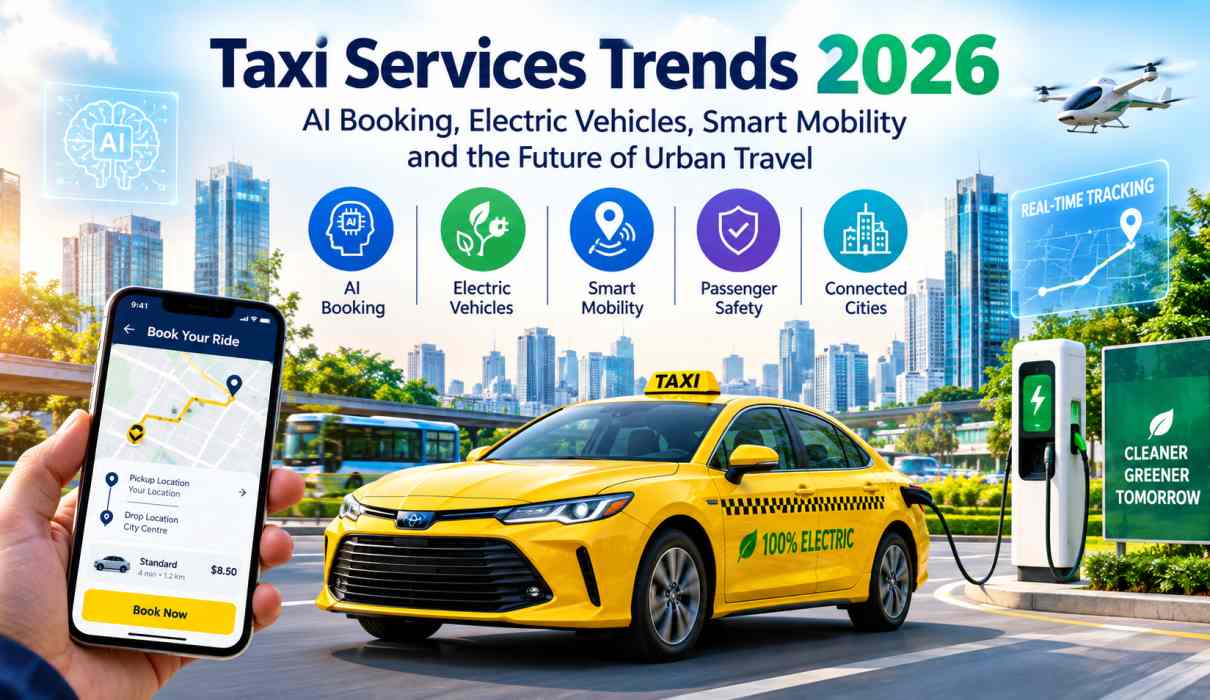
The future of taxi services in 2026 is being shaped by several major trends, including AI-powered booking, electric taxi fleets, smart mobility platforms, contactless payments, improved passenger safety, real-time tracking and the gradual development of autonomous taxi technology. These innovations are changing how passengers book rides, how drivers operate vehicles and how transportation companies manage their fleets.
This article explores the major taxi services trends in 2026, their benefits, challenges and potential role in the future of urban transportation.
The Changing Taxi Industry in 2026
Taxi services remain an important part of urban mobility. They connect residential areas with business districts, airports, railway stations, shopping centres, hotels and tourist destinations. Taxis are also particularly useful for passengers who need direct, point-to-point transportation.
However, customer expectations have changed significantly. Passengers increasingly want to know when their vehicle will arrive, how much the journey may cost, which route the driver will take and how they can pay.
Digital technology is helping taxi companies respond to these expectations. Modern taxi platforms can combine booking, navigation, payment, fleet management and customer communication within a single digital ecosystem.
Key trends shaping the sector include:
- AI-powered taxi booking
- Electric and hybrid taxi fleets
- Real-time GPS tracking
- Digital and contactless payments
- Smart fleet management
- Improved passenger safety technology
- Integrated mobility platforms
- Sustainable urban transportation
- Data-driven route optimisation
- Autonomous and robotaxi research
Together, these developments are creating a more connected taxi industry.
AI-Powered Taxi Booking
Artificial intelligence is becoming one of the most important technologies in modern transportation. In 2026, AI can support taxi platforms by analysing booking patterns, traffic conditions, demand levels and vehicle availability.
AI-powered systems can help predict where passengers are likely to request rides and assist fleet operators in positioning vehicles more efficiently. This may reduce unnecessary empty driving and improve vehicle utilisation.
AI can also improve the customer booking experience. Intelligent systems can recommend pickup locations, estimate journey times and provide automated assistance when passengers have questions.
For taxi companies, AI can support:
- Demand forecasting
- Driver allocation
- Route optimisation
- Estimated arrival times
- Customer service automation
- Fleet scheduling
- Fraud detection
- Operational analytics
The role of AI is therefore expanding beyond simple booking applications. It is becoming part of the broader management system behind modern taxi services.
Electric Taxis and Sustainable Transportation
The transition toward electric vehicles is another major trend in taxi services in 2026.
Electric taxis can help reduce tailpipe emissions and may lower operating costs over the lifetime of a vehicle. This is particularly relevant in cities where governments are introducing cleaner transportation policies and low-emission zones.
Taxi vehicles often travel significantly more kilometres than privately owned cars, which means fleet electrification can have a noticeable impact on urban transportation emissions.
Electric taxis can also provide a quieter passenger experience. Reduced engine noise may improve comfort, particularly during journeys through busy city centres.
However, electric taxi adoption also presents challenges. Operators need access to reliable charging infrastructure, appropriate vehicle ranges and efficient charging schedules. High vehicle utilisation means taxi companies cannot always afford long periods when vehicles are unavailable for charging.
Fast-charging networks, depot charging and better battery technology will therefore be important to the future of electric taxi services.
Smart Mobility and Connected Transportation
Smart mobility refers to the use of digital technologies, connected infrastructure and data to improve transportation systems.
Taxi services are increasingly becoming part of wider smart-city ecosystems. Instead of operating as completely independent vehicles, taxis can interact with navigation platforms, traffic information systems, public transportation networks and digital payment services.
A smart taxi platform can use real-time information to help drivers avoid congestion and identify efficient routes.
For passengers, connected mobility can make it easier to combine different forms of transportation. A traveler might use a train for the majority of a journey and a taxi for the final connection.
This concept, often described as Mobility as a Service (MaaS), aims to make different transportation options easier to access through integrated digital platforms.
Real-Time GPS Tracking
GPS tracking has become a standard feature of modern taxi platforms, but its role continues to expand.
Passengers can use real-time tracking to see where their taxi is located and receive updated arrival information. Drivers can use navigation systems to identify efficient routes and respond to traffic conditions.
Taxi operators can also use fleet tracking to monitor vehicle locations and improve dispatching.
Real-time data can help transportation companies understand:
- Where vehicles spend the most time
- Which areas experience high demand
- Where traffic causes delays
- How long journeys typically take
- When vehicles require maintenance
- How efficiently fleets are being used
This makes GPS technology useful not only for navigation but also for long-term fleet planning.
Digital and Contactless Payments
Payment technology is transforming the taxi customer experience.
Passengers increasingly expect convenient payment options, including mobile wallets, cards, QR-based payments and in-app transactions. Digital payments can reduce the need to carry cash and simplify transaction records.
For businesses, electronic payments can improve accounting and make it easier to track revenue.
Digital receipts can also provide passengers with a record of their journey, which can be particularly useful for business travel and expense management.
As digital payment systems become more widespread, taxi companies are likely to continue offering multiple payment options to accommodate different passenger preferences.
Passenger Safety and Security
Safety remains one of the most important considerations when choosing a taxi service.
Modern technology can support passenger safety through features such as driver identification, GPS trip tracking, emergency assistance, digital trip records and journey-sharing options.
Some platforms allow passengers to share their trip details with friends or family members. Others provide emergency buttons that can connect passengers with support services.
Driver verification and digital identity systems can also help transportation platforms establish greater accountability.
Vehicle technology is developing as well. Cameras, advanced driver-assistance systems and other connected safety technologies may increasingly become part of professional taxi fleets.
Technology cannot eliminate every transportation risk, but properly designed systems can provide additional safety tools for drivers and passengers.
Data-Driven Fleet Management
Taxi companies manage complex fleets that need regular maintenance, cleaning, charging or refuelling and driver scheduling.
Data analytics can help operators understand how their vehicles are being used.
Fleet management software can monitor mileage, maintenance schedules, fuel or electricity consumption and vehicle availability.
Predictive maintenance is another developing area. Instead of waiting for a component to fail, data from vehicles can help identify potential maintenance issues earlier.
This can reduce unexpected downtime and help taxi operators keep vehicles available for customers.
For larger fleets, data-driven management can also help improve scheduling and reduce inefficient vehicle movements.
The Growth of Airport and Business Taxi Services
Airport transfers remain an important part of the taxi industry. Travelers often need reliable transportation between airports, hotels, homes and business locations.
In 2026, airport taxi services are increasingly using digital reservations, flight information, real-time tracking and automated notifications.
Pre-booked airport transportation can give passengers greater certainty about pickup arrangements, particularly when traveling at night or carrying significant luggage.
Executive and corporate taxi services are also adopting digital tools. Business travelers may benefit from scheduled pickups, electronic receipts, professional drivers and account-based billing.
The combination of traditional service quality and modern technology is likely to remain important in this segment.
Taxi Services for Tourism and Travel
Taxi services play a significant role in tourism. Visitors often depend on taxis when they arrive in an unfamiliar city and need transportation to hotels, attractions or other destinations.
Digital taxi platforms can make this process easier by providing location-based booking, navigation, fare information and digital payment options.
Tourist-focused taxi services may also benefit from multilingual applications and driver communication tools.
For destinations with large visitor numbers, taxis can complement public transportation by providing flexible point-to-point mobility.
This makes the taxi industry an important part of the wider travel and tourism ecosystem.
Autonomous Taxis and Robotaxis
One of the most discussed developments in transportation is autonomous taxi technology.
Robotaxis use automated driving systems to transport passengers with limited or no direct human driving involvement, depending on the technology and regulatory environment.
Although autonomous taxi deployment varies considerably between cities and countries, research and commercial testing continue.
The development of robotaxis involves multiple technologies, including:
- Artificial intelligence
- Computer vision
- Radar and other sensors
- High-precision mapping
- Vehicle control systems
- Connectivity
- Advanced safety software
Autonomous taxis could eventually change how urban transportation is organised. However, large-scale adoption depends on technological performance, regulation, public acceptance, infrastructure and business economics.
For this reason, robotaxis should be viewed as an evolving part of the future mobility landscape rather than a universal replacement for conventional taxis in 2026.
Taxi Industry and the Future of Urban Mobility
Urban transportation is becoming increasingly multimodal. Cities need different options to meet the needs of commuters, tourists, older passengers, people with disabilities and travelers who live in areas with limited public transportation.
Taxis can fill an important gap because they provide flexible, point-to-point service.
The future may involve closer integration between taxis, buses, trains, metro systems, bicycles and other mobility services.
For example, a single application could potentially help a passenger plan a journey involving a train followed by a taxi, while providing real-time information about both parts of the trip.
This integrated approach could make urban mobility more convenient and efficient.
Challenges Facing Taxi Services in 2026
Despite technological progress, the taxi industry continues to face several challenges.
One major issue is the cost of upgrading fleets and technology. Electric vehicles, charging infrastructure, software systems and safety equipment require investment.
Drivers also need training to work effectively with new digital tools and vehicle technologies.
Data privacy is another consideration. Taxi platforms collect information about journeys, payments and locations. Companies therefore need appropriate security and privacy practices.
Competition is also changing. Traditional taxi companies compete with ride-hailing platforms, public transportation and emerging mobility services.
Regulation remains important as governments determine how digital platforms, electric fleets and autonomous vehicles should operate.
Successful taxi businesses will need to balance innovation with affordability, reliability, safety and good customer service.
What Does the Future of Taxi Services Look Like?
The future of taxi services is likely to be increasingly digital, electric, connected and data-driven.
AI can help companies understand demand and improve dispatching. Electric vehicles can support cleaner urban transportation. Real-time tracking can improve visibility, while digital payments can make transactions simpler.
At the same time, human drivers will continue to play an important role across many markets, particularly where customers value professional service, local knowledge and flexibility.
Autonomous vehicles may gradually become another part of the mobility ecosystem, but their development will depend on technological and regulatory progress.
The most successful taxi services are likely to combine technology with the fundamentals passengers already value: safety, reliability, convenience, transparency and comfortable travel.
Conclusion
The Taxi Services Trends 2026 reflect a broader transformation in urban transportation. AI-powered booking, electric vehicles, smart mobility, real-time tracking, digital payments and advanced fleet management are changing how taxi businesses operate and how passengers experience transportation.
At the same time, emerging technologies such as autonomous driving and intelligent mobility platforms are creating new possibilities for the future.
The taxi industry is not simply becoming more digital; it is becoming more connected to the wider transportation ecosystem. As cities continue to grow and travelers demand convenient, sustainable and reliable mobility, taxi services will remain an important part of urban travel.
For taxi operators, drivers and transportation businesses, adapting to these changes can create new opportunities. For passengers, the continued evolution of technology could mean easier bookings, smarter journeys, more flexible payment options and increasingly connected travel experiences.
Ultimately, the future of taxi services in 2026 and beyond will be shaped by the combination of technology, sustainability, customer expectations, regulation and human-centred transportation. The next generation of taxi services will likely be smarter and more connected while continuing to serve the fundamental need for convenient point-to-point travel.