
 By
Smart Airport Transfer Services: How AI and Digital Booking Are Transforming Airport Transportation
Introduction
The transportation industry is experiencing a significant digital transformation, and airport transportation is becoming smarter, faster, and more convenient than ever before. Traditional airport taxis and transportation services are gradually adopting modern technologies to improve passenger experiences. Today, smart airport transfer services are changing how travelers book vehicles, communicate with drivers, and reach their destinations.
Artificial intelligence (AI), digital booking platforms, GPS tracking, automated scheduling, and contactless payments are making airport transfers more efficient and accessible. Whether someone is traveling for business, planning a family vacation, or arriving in a new country, smart transportation solutions can help reduce common travel challenges.
Modern travelers increasingly value convenience, transparency, safety, and reliable transportation. Airport transfer companies are responding by introducing technology-driven services that simplify the entire journey.
In this article, we explore how AI and digital booking are transforming airport transportation, their major benefits, emerging trends, and what travelers can expect from smart airport transfer services in the coming years.
What Are Smart Airport Transfer Services?
Smart airport transfer services are technology-enabled transportation solutions designed to provide convenient airport pickup and drop-off experiences.
Unlike traditional taxi arrangements, smart airport transfers often integrate digital platforms, automated systems, and real-time information to improve booking and transportation management.
Passengers can book vehicles through websites or mobile applications, receive booking confirmations, track assigned drivers, and complete payments digitally.
Key Features of Smart Airport Transfers
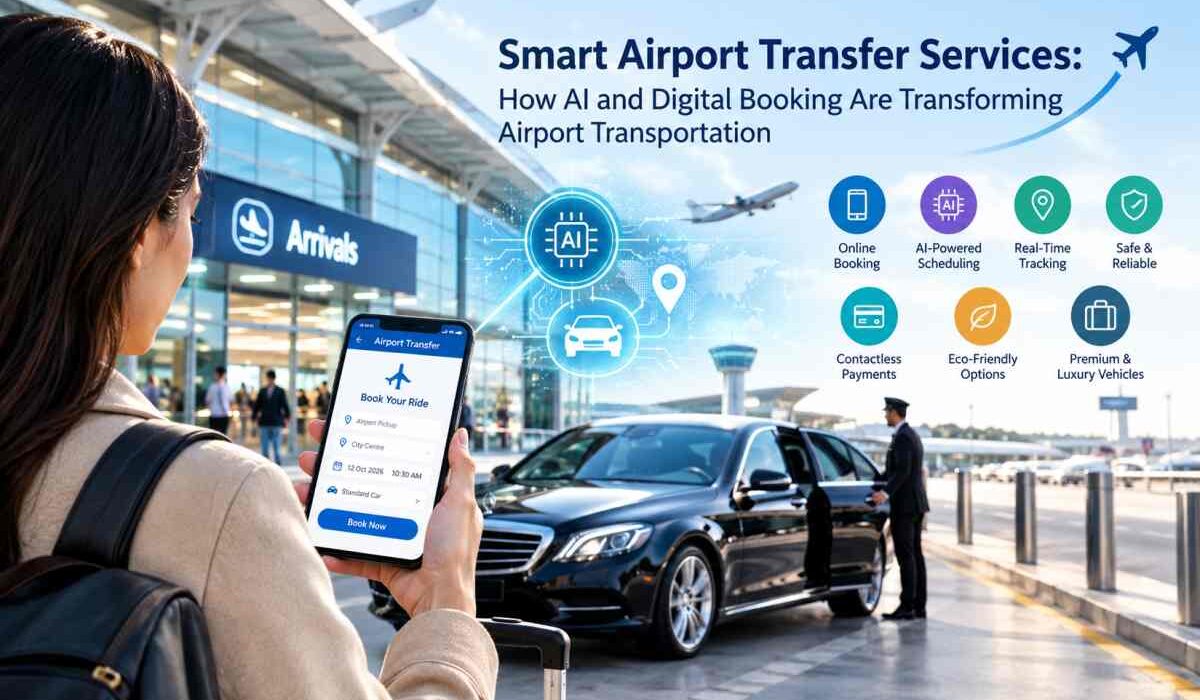
- Online Booking: Reserve airport transportation through websites or mobile applications.
- Real-Time GPS Tracking: Monitor vehicle locations and estimated arrival times.
- AI-Powered Scheduling: Improve driver allocation and pickup coordination.
- Flight Monitoring: Adjust pickup planning using updated flight information.
- Digital Payments: Pay through secure online payment systems.
- Automated Notifications: Receive confirmations, driver details, and travel updates.
These features make smart airport transportation particularly useful for passengers who prefer organized and predictable travel arrangements.
How Artificial Intelligence Is Transforming Airport Transportation
Artificial intelligence is becoming an important technology in modern transportation management. AI-powered systems can analyze travel patterns, traffic conditions, booking information, and operational requirements to improve service efficiency.
Airport transfer providers can use AI to automate repetitive processes while supporting better decisions.
1. AI-Powered Route Optimization
Traffic congestion is one of the biggest challenges affecting airport transportation.
AI-powered route optimization systems can analyze road conditions, historical traffic patterns, and real-time information to recommend suitable routes.
For example, if a major road experiences unexpected congestion, a smart navigation system may suggest an alternative route.
This technology can help reduce unnecessary delays, improve fuel efficiency, and support more predictable travel times.
However, actual journey times still depend on traffic, weather, road restrictions, and other external conditions.
2. Intelligent Driver Allocation
Traditional airport transfer companies often rely on manual coordination to assign drivers.
AI-powered dispatch systems can simplify this process by considering driver availability, vehicle locations, booking schedules, and passenger requirements.
The system may recommend the nearest suitable vehicle while considering operational efficiency.
Intelligent driver allocation can reduce administrative work and improve the coordination of multiple airport pickups.
It is especially valuable for transportation companies managing large vehicle fleets.
3. Predictive Demand Analysis
Airport transportation demand changes throughout the day.
Flight schedules, holidays, tourism seasons, and business travel patterns can influence passenger demand.
AI systems can analyze historical booking data and other relevant information to forecast busy periods.
Transportation companies can use these forecasts to plan vehicle availability and driver schedules.
Better demand planning may reduce passenger waiting times and help operators manage resources more efficiently.
The Growing Importance of Digital Airport Transfer Booking
Digital booking platforms are transforming the way travelers arrange airport transportation.
Previously, passengers often needed to contact transportation providers by telephone or search for taxis after arriving at the airport.
Today, digital airport transfer booking allows travelers to organize their transportation before starting their journeys.
Convenient Online Reservations
Travelers can book airport transfers using smartphones, tablets, or computers.
A typical online booking process involves selecting the pickup location, destination, travel date, passenger count, and preferred vehicle category.
After confirming the reservation, customers receive booking information through email, SMS, or an application.
This process can make transportation planning easier, particularly for international travelers unfamiliar with local taxi services.
Transparent Pricing Information
Digital platforms can display estimated fares or fixed transfer prices before customers confirm bookings.
Depending on the provider, prices may consider distance, vehicle type, travel time, airport fees, and additional services.
Clear pricing information helps travelers compare transportation options and plan their budgets.
Passengers should still review cancellation policies, waiting-time charges, tolls, and other applicable conditions.
Flexible Booking Management
Many digital booking systems allow passengers to modify reservations, update pickup information, or cancel bookings according to provider policies.
This flexibility is valuable when travel plans change unexpectedly.
Some platforms also provide customer support through live chat, automated assistants, or messaging services.
Real-Time Flight Tracking and Automated Airport Pickup
Flight delays and schedule changes frequently affect airport transportation arrangements.
One of the most useful innovations in smart airport transfer services is the integration of real-time flight information.
How Flight Tracking Works
When booking an airport transfer, passengers may provide their flight numbers.
The transportation platform can use flight information services to monitor estimated arrival times and schedule changes.
If a flight arrives earlier or later than expected, the system may notify the operator or recommend adjustments to the pickup schedule.
This can improve coordination between passengers and drivers.
Benefits of Automated Flight Monitoring
Flight tracking offers several practical advantages:
- Better coordination of airport pickups.
- Reduced unnecessary driver waiting.
- Improved communication during flight delays.
- More accurate estimated pickup times.
- Greater convenience for international travelers.
However, flight tracking does not automatically guarantee that a driver will be available after every schedule change. Passengers should confirm the provider’s flight-delay and waiting-time policies.
Mobile Applications Are Improving Airport Transfer Experiences
Mobile applications have become an important part of modern airport transportation.
A well-designed airport transfer application can provide access to booking information, payment options, driver communication, and journey updates.
Real-Time Vehicle Tracking
GPS-enabled applications allow passengers to monitor the location of their assigned vehicles.
This feature is especially helpful at busy airports where multiple pickup zones and terminals can create confusion.
Passengers can check estimated arrival times and follow instructions for meeting their drivers.
Digital Driver Information
Some applications display driver names, vehicle registration details, and contact information before pickup.
Passengers can use these details to identify their assigned vehicles.
This additional transparency can improve confidence during airport pickups.
Instant Booking Notifications
Automated notifications keep passengers informed throughout the transportation process.
Travelers may receive updates when reservations are confirmed, drivers are assigned, vehicles approach pickup points, or journeys are completed.
These features reduce uncertainty and improve communication.
Contactless Payments and Secure Digital Transactions
Digital payment technology is another major development in airport transportation.
Travelers increasingly appreciate payment options that reduce the need to carry cash or exchange currency immediately after arriving.
Smart airport transfer platforms may support credit cards, debit cards, digital wallets, and other electronic payment methods.
In India, some providers also support UPI payments.
Advantages of Digital Payments
Digital payments offer convenience, transaction records, and potentially faster checkout experiences.
Passengers can review payment confirmations and access digital receipts for personal records or business expense reporting.
Corporate travelers may particularly benefit from centralized billing and electronic invoices.
Nevertheless, travelers should use trusted booking platforms and review payment security information before entering financial details.
Transportation companies must also protect customer payment information through appropriate security practices.
How Smart Airport Transfers Improve Passenger Safety
Passenger safety remains an essential consideration in airport transportation.
Digital technology can support safer travel experiences by improving identification, communication, and journey visibility.
Driver and Vehicle Verification
Professional airport transfer companies may conduct driver identity checks, license verification, and vehicle inspections.
Digital platforms can make selected verification details available to passengers before pickup.
Travelers should choose transportation providers that clearly explain their safety procedures.
GPS-Based Journey Monitoring
GPS tracking can help passengers follow their routes and share trip information with trusted contacts when supported by the application.
Transportation operators may also use journey monitoring to identify unexpected delays or operational issues.
Customer Support and Emergency Assistance
Some transportation applications provide customer support features and emergency contact options.
These tools can help passengers communicate concerns or request assistance.
However, technology should complement established safety procedures rather than replace them.
Smart Airport Transfers for Business and Corporate Travelers
Business travelers often work with demanding schedules and require dependable transportation between airports, hotels, offices, and conference venues.
Corporate airport transfer services can use digital technology to simplify travel coordination.
Efficient Corporate Travel Planning
Companies can arrange transportation for employees, executives, and visiting clients through centralized booking systems.
Travel managers may access reservation histories, billing information, and upcoming travel schedules.
This reduces the administrative effort associated with coordinating multiple journeys.
Professional Chauffeur Services
Premium airport transportation providers may offer professional chauffeurs, executive vehicles, and personalized pickup arrangements.
Digital scheduling tools help coordinate these services with flight arrivals and business appointments.
Centralized Expense Management
Corporate booking platforms can provide electronic invoices and organized payment records.
This helps businesses monitor transportation expenses and simplify reimbursement procedures.
For organizations managing frequent business travel, integrated airport transfer systems can offer significant administrative benefits.
Eco-Friendly Airport Transportation and Smart Fleet Management
Sustainability is becoming increasingly important in the transportation industry.
Airport transfer providers are exploring ways to reduce unnecessary vehicle movement, improve route efficiency, and introduce lower-emission transportation options.
Electric Airport Transfer Vehicles
Electric vehicles are becoming an option for airport transportation in locations with suitable charging infrastructure.
Electric airport transfers produce no tailpipe emissions, although their overall environmental impact depends on electricity generation, vehicle production, and other factors.
Transportation companies may gradually introduce electric vehicles as charging facilities and operating conditions improve.
Intelligent Fleet Optimization
Smart fleet management software can help operators reduce unnecessary vehicle movement and coordinate passenger pickups more efficiently.
Better scheduling may decrease empty vehicle journeys and improve vehicle utilization.
These improvements can potentially reduce energy consumption and operating costs.
Supporting Sustainable Travel Choices
Digital booking platforms can help passengers compare available vehicle categories, including electric or shared transportation options.
Providing clear information allows travelers to make choices that better match their preferences and environmental priorities.
Benefits of Smart Airport Transfer Services for Travelers
The growing adoption of technology-driven airport transportation offers several advantages.
Greater Convenience: Passengers can organize transportation before arriving at the airport instead of searching for available taxis.
Improved Time Management: Flight tracking, automated scheduling, and navigation systems can improve coordination and reduce avoidable delays.
Better Transparency: Digital platforms provide access to booking details, pricing information, and driver updates.
Flexible Vehicle Options: Travelers may choose standard cars, executive vehicles, larger family vehicles, or other available transportation categories.
Simplified Payments: Digital transactions reduce dependence on cash and provide accessible payment records.
Improved Communication: Automated notifications and in-app messaging help passengers stay informed.
The actual benefits depend on the provider’s technology, service standards, and operational reliability.
Challenges Facing Smart Airport Transportation
Despite its advantages, smart airport transportation also faces several challenges.
Data Privacy and Cybersecurity
Booking platforms collect information such as passenger names, travel schedules, contact details, and payment records.
Companies must protect this information through appropriate cybersecurity measures and responsible data management.
Technology Reliability
Mobile applications, payment systems, GPS services, and booking platforms can occasionally experience technical problems.
Providers need reliable support processes and backup arrangements to maintain service continuity.
Digital Accessibility
Not every traveler is comfortable using smartphone applications or online payment systems.
Transportation companies should consider accessible booking interfaces and alternative reservation methods.
Integration With Airport Operations
Airport pickup arrangements must comply with local rules, terminal access requirements, and designated passenger collection areas.
Technology providers must coordinate their systems with practical airport operating conditions.
Addressing these challenges is essential for building reliable and inclusive airport transportation services.
Future Trends in Smart Airport Transfer Services
Airport transportation is likely to become increasingly connected as digital technology develops.
Several innovations could influence the industry’s future.
Advanced AI-Powered Travel Assistance
AI assistants may help passengers select vehicles, understand booking conditions, receive travel updates, and resolve common questions.
More advanced systems could provide personalized transportation recommendations based on customer preferences.
Integrated Travel Booking Platforms
Airport transfers may become more closely connected with airline reservations, hotel bookings, and corporate travel management systems.
Integrated platforms could simplify travel planning by bringing multiple services together.
Smarter Electric Vehicle Operations
Fleet management systems may increasingly consider battery levels, charging availability, and vehicle schedules when assigning electric airport transfer vehicles.
This could improve the operational efficiency of electric transportation fleets.
Greater Automation
Automated dispatching, digital customer support, and predictive maintenance tools may help transportation providers manage operations more effectively.
Autonomous vehicles could eventually influence certain airport transportation services, but widespread adoption will depend on safety validation, regulations, infrastructure, and public acceptance.
How to Choose the Best Smart Airport Transfer Service
Selecting a reliable airport transfer provider is important for a comfortable journey.
Travelers should consider the following factors before confirming a reservation:
- Booking Convenience: Choose a provider offering a clear and straightforward reservation process.
- Pricing Transparency: Review the total fare, additional charges, and cancellation conditions.
- Flight Tracking: Check whether the company monitors flight arrivals and accommodates schedule changes.
- Vehicle Availability: Select a vehicle suitable for passengers, luggage, and accessibility requirements.
- Driver Standards: Look for professional drivers and appropriate vehicle safety procedures.
- Customer Reviews: Examine recent customer feedback across credible platforms.
- Support Availability: Confirm how to contact the provider if travel arrangements change.
A reliable service combines useful technology with professional drivers, transparent policies, and responsive customer assistance.
Frequently Asked Questions (FAQs)
1. What are smart airport transfer services?
Smart airport transfer services use digital booking platforms, GPS tracking, automated scheduling, and other technologies to improve airport pickup and drop-off experiences.
2. How does AI improve airport transportation?
AI can support route optimization, driver allocation, demand forecasting, and scheduling. These capabilities help transportation providers coordinate journeys more efficiently.
3. Can I book an airport transfer online?
Yes. Many airport transportation companies allow passengers to book vehicles through websites or mobile applications before their journeys.
4. Do smart airport transfers monitor flight delays?
Some providers use flight tracking systems to monitor arrival information and adjust pickup arrangements. Policies vary, so passengers should confirm the service details before booking.
5. Are digital airport transfer bookings safe?
Digital booking can be convenient and secure when providers use appropriate payment protection, privacy practices, driver verification, and customer support procedures.
6. Are smart airport transfers suitable for business travelers?
Yes. Corporate travelers can benefit from advance reservations, professional chauffeur services, digital invoices, and centralized transportation management.
Conclusion
Smart airport transfer services are reshaping modern airport transportation by combining artificial intelligence, digital booking platforms, GPS tracking, automated scheduling, and convenient payment technologies.
These innovations can make airport travel more organized, transparent, and comfortable for passengers while helping transportation companies improve operational efficiency.
From intelligent route planning and real-time flight monitoring to corporate travel management and electric vehicle integration, technology is creating new opportunities throughout the airport transportation industry.
However, successful digital transformation requires more than advanced software. Reliable drivers, clear pricing, strong data protection, accessible booking options, and responsive customer service remain essential.
As technology continues to evolve, smart airport transfer services are expected to play an increasingly important role in delivering convenient, connected, and efficient transportation experiences for travelers worldwide.